 Artificial intelligence is set to play a transformative role in the discovery and design of next-generation materials.
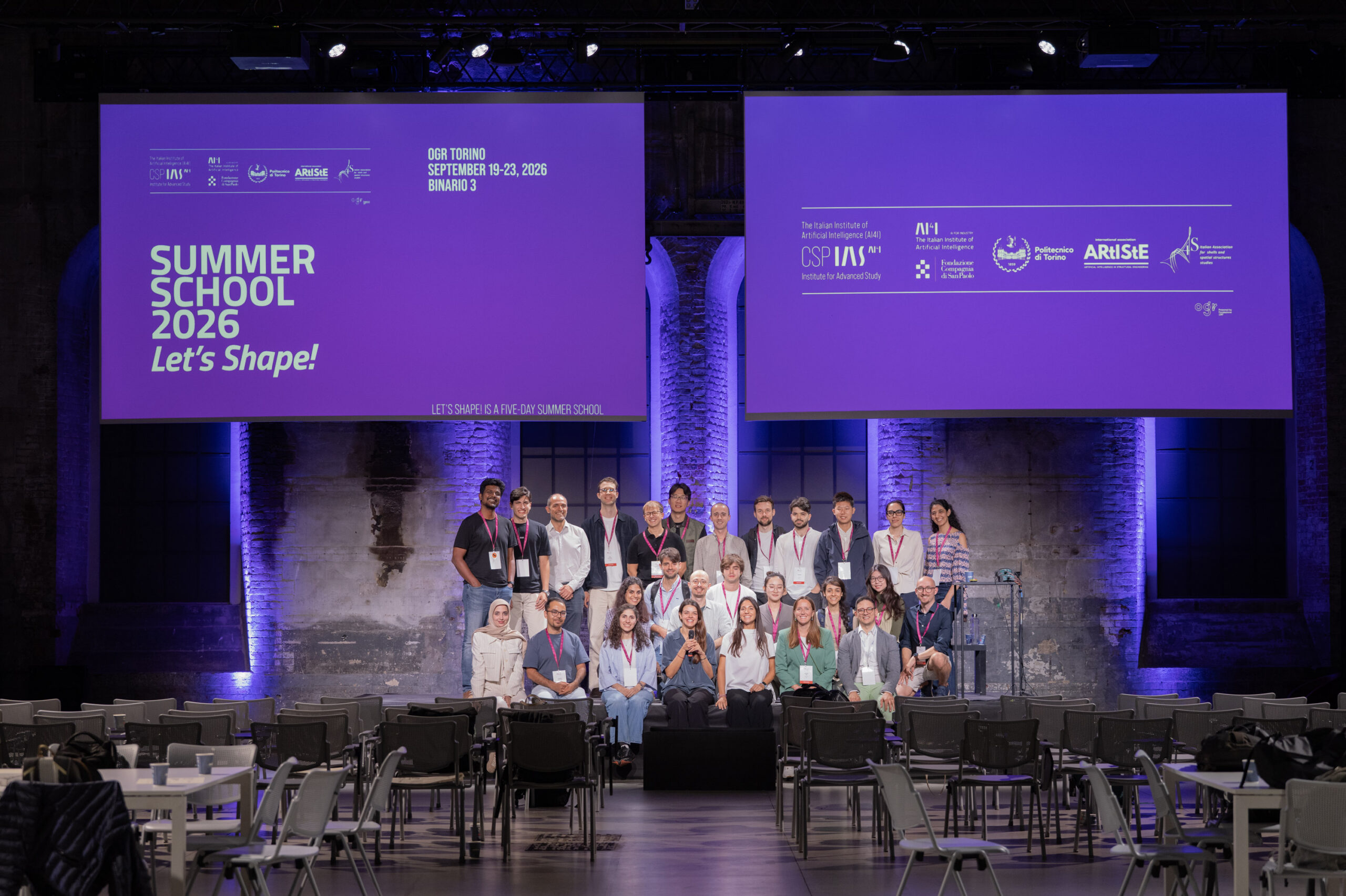
This was the key message of “AI for Materials Design”, the lecture delivered by Sir Konstantin Novoselov, Nobel Prize in Physics 2010, as part of the 2026 edition of the Institute for Advanced Study (IAS), the initiative jointly promoted by the Italian Institute of Artificial Intelligence (AI4I) and Fondazione Compagnia di San Paolo.
The convergence between AI and materials science is opening new pathways to address some of today’s most pressing challenges, from energy efficiency and sustainability to advanced applications in industry and healthcare.
“The inefficiencies of data centers and electronic devices are rooted in physical limits and quantum phenomena,” Novoselov noted, pointing to graphene and emerging materials as a crucial frontier for more efficient and sustainable electronics.
Artificial intelligence enables researchers to model millions of material combinations, describe complex system dynamics, and design materials atom by atom. This shift makes it possible to move beyond passive materials toward intelligent materials — capable of self-repair, adaptation and decision-making — with applications ranging from next-generation batteries to sustainable construction and medical technologies.
At the same time, new materials will be essential for the evolution of artificial intelligence itself, contributing to new computational architectures and helping overcome current energy constraints.
As Novoselov highlighted, this represents a profound paradigm shift, where functionality emerges directly from matter.
For AI4I, the intersection between artificial intelligence and materials science represents a strategic domain for industrial competitiveness. “The ability to design materials with targeted properties opens new scenarios for energy, manufacturing and digital infrastructures,” said Fabio Pammolli, President of the Italian Institute of Artificial Intelligence (AI4I). “The role of AI4I is to connect research, engineering and industry, accelerating both development and adoption of these technologies.”
The lecture is part of the activities of the Institute for Advanced Study (IAS), a platform for international scientific exchange and advanced reflection on artificial intelligence, bringing together leading researchers, industry experts and global thinkers to explore AI across disciplines.