Riccardo Di Maria, Head of HPC/AI and Engineering at AI4I, joined the institutional debate on the strategic role of frontier research in Italy’s competitiveness, focusing on the conditions required to turn scientific excellence, talent and knowledge into industrial innovation.
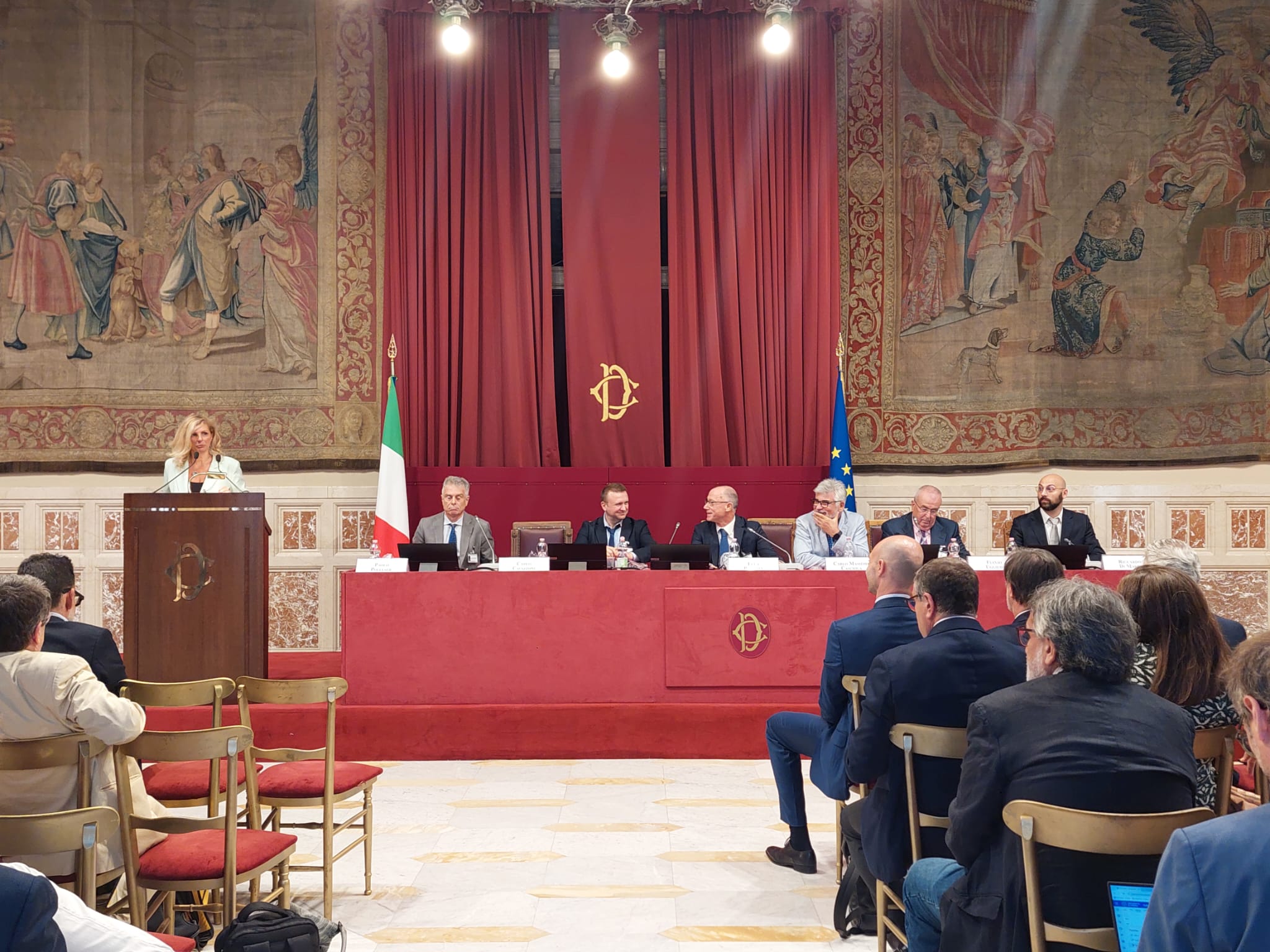
On September 15, 2026, the Sala della Regina at the Italian Chamber of Deputies in Rome hosted “The Strategic Role of Frontier Research. Why Investing in Knowledge Means Building the Future – The ERCinItaly Model as a Driver of Scientific Excellence and Competitiveness.”
The event was organised by Radio Parlamentare – Percorso Consapevole in collaboration with ERCinItaly APS, under the patronage of the Parliamentary Intergroup for Knowledge, Scientific Research and Education for Complexity.
Bringing together representatives from institutions, academia, research, industry and finance, the discussion addressed one of the key challenges facing Italy: strengthening the country’s ability to translate frontier research and scientific knowledge into innovation, technology transfer and new industrial value chains.
Institutional participants included Alessandro Giglio Vigna, Chair of the EU Policies Committee of the Chamber of Deputies; Gianni Girelli, President of the Parliamentary Intergroup for Knowledge and Scientific Research; Elena Murelli, Secretary of the Presidency of the Senate; and MPs Fabrizio Benzoni, Alberto Pandolfo and Andrea Mascaretti. The scientific framework was introduced by Manuela Raimondi, President of ERCinItaly APS and Professor of Bioengineering at Politecnico di Milano.
From research to industry
Riccardo Di Maria joined the panel “From Research to Industry: Innovation, Technology Transfer and New Industrial Value Chains”, alongside Paolo Pollesel, Head of the Research Centre on New Feedstocks and Energy Carriers at Eni; Carlo Cavazzoni, Head of Digital Infrastructure at Leonardo; Carlo Massimo Casciola, President of the Italian Academy of Engineering and Technology; and Fulvio Uggeri, Senior Advisor R&D at Bracco Imaging.
The panel brought research and major industrial players together around a critical step in the innovation process: moving scientific results beyond the laboratory and turning them into technologies, industrial applications, new companies and value chains.
The discussion also reflected an ecosystem that AI4I is already helping to build: Leonardo and Eni are among the major industrial players dialoguing with the Institute across different areas.
Talent comes before the model
Di Maria reframed the debate on public-private partnerships by focusing on the conditions that ultimately determine whether any model can succeed.
From the industrial research laboratories of Bell Labs, GE and IBM to the public-private ecosystem behind mRNA technologies and privately driven frontier research such as AlphaFold, different approaches have demonstrated their ability to generate major technological advances.
There is therefore no single organisational model for innovation. The critical factor is the ability to develop, attract and retain scientific and technological talent.
This is one of the areas in which AI4I is building its model in Turin, attracting researchers with international experience and leveraging available fiscal incentives to make returning to or relocating to Italy more competitive against leading international research and technology markets.
The objective goes beyond attracting people. It is about creating an environment in which talent can access the infrastructure, research capabilities, engineering expertise and industrial connections required to pursue ambitious projects in Italy.
Bridging research and capital
A second challenge is the ability to support risk. Frontier research often requires patient capital, longer development cycles and a willingness to invest before technological and commercial outcomes become fully predictable.
In this context, institutions can act as catalysts and a trust layer, creating environments in which researchers, companies and investors can engage under clearer conditions and with lower perceived risk.
This approach is also reflected in SUK – System User Knowledge, AI4I’s system connecting industrial demand with qualified providers of artificial intelligence solutions. By providing an independent layer of qualification and trust, the Institute can facilitate relationships that – particularly within a fragmented industrial landscape – may otherwise struggle to emerge through market mechanisms alone.
Building the infrastructure that turns knowledge into industrial capacity
AI4I’s participation in the debate at the Chamber of Deputies reflects a broader ambition: connecting frontier research, talent, computing capacity, engineering and industry, while shortening the distance between the creation of knowledge and its industrial application.
This intersection is increasingly central to Italy’s technological competitiveness. The challenge is not simply to adopt technologies developed elsewhere, but to create the conditions for research and expertise generated or attracted in Italy to evolve into products, new companies, scale-ups and industrial value chains.
As Di Maria stressed, retaining talent also means acting earlier: investing in researchers and technologists before capital, infrastructure and opportunities elsewhere become the only viable route for turning their ideas into innovation.