Innovation and competitiveness
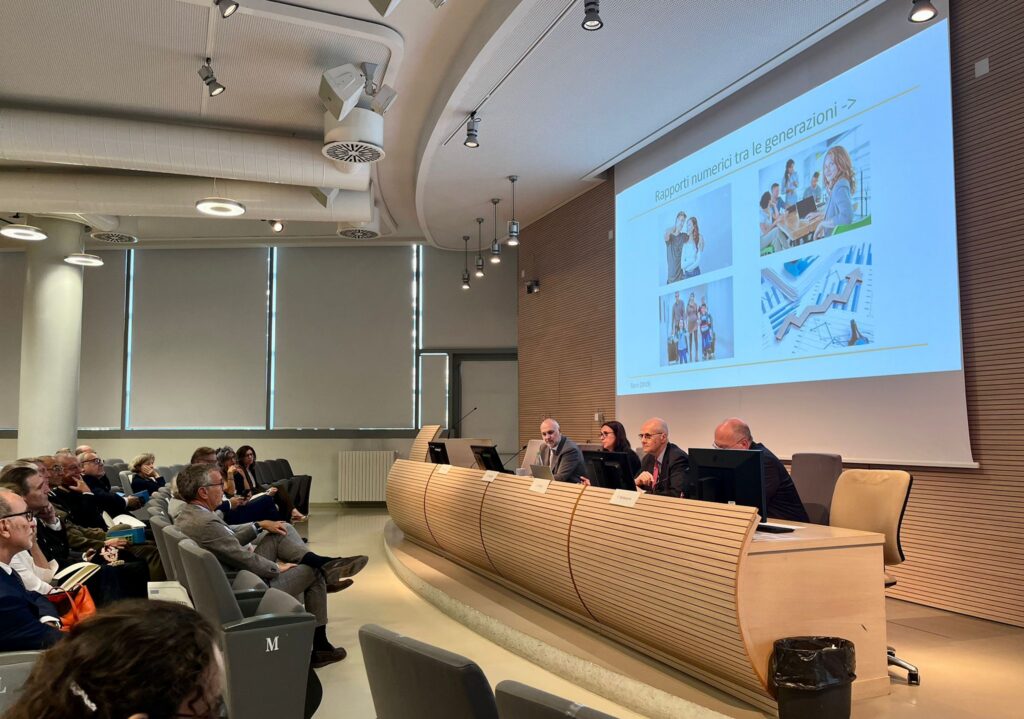
Innovation, productivity and human capital were at the centre of the discussion held on 16 June 2026 during the presentation of the Bank of Italy’s Annual Report on the Economy of Piedmont, hosted at the Luigi Einaudi Campus of the University of Turin.
Among the invited discussants was Antonio Emilio Calegari, Director of AI4I, who joined representatives from academia and institutions in a conversation on the challenges that will shape the future competitiveness of the region and of the country as a whole.
The productivity and demographic challenge
Following the presentation of the report by Cristina Fabrizi and Silvia Anna Maria Camussi of the Bank of Italy, the discussion brought together Calegari, Chiara Pronzato, Professor of Demography at the University of Turin, and Fabrizio Balassone, Deputy Head of the Economics and Statistics Department of the Bank of Italy.
The debate focused on two closely connected priorities for sustainable economic growth: the diffusion of innovation and advanced technologies to increase productivity, and the need to broaden participation in the labour market in response to long-term demographic trends.
Artificial Intelligence as a growth driver
In this context, Calegari highlighted the role of artificial intelligence as a strategic enabler of industrial transformation. The ability to accelerate the adoption of advanced technologies, strengthen the connection between research and industry, and support the development of new skills is increasingly becoming a decisive factor for economic competitiveness.
The discussion also underscored the importance of investing in talent, education and technological capabilities to ensure that businesses can fully benefit from the opportunities offered by digital transformation.
From research to economic impact
These themes are closely aligned with AI4I’s mission. Through its research programmes, industrial collaborations and technology transfer initiatives, the Institute works to support the adoption of artificial intelligence across the productive system, helping translate scientific excellence into economic and industrial impact.
The event offered an important opportunity to reflect on how regions can combine innovation, productivity growth and human capital development to strengthen their position in an increasingly knowledge-based economy.