
Updated July 2026
AI4I Strategic Plan

AI4I
Research, Engineering, Industry: AI4I’s Strategic Plan
The Strategic Plan is the Institute’s planning framework for defining its strategic direction, intervention priorities, operating model and medium- to long-term development trajectory. The Plan was approved by the Supervisory Committee on 31 October 2025 and subsequently updated on 7 July 2026, reflecting the evolution of the Institute’s organisational structure, the progressive consolidation of its activities, and developments in the technological and industrial landscape.
The Plan translates AI4I’s mission into an integrated strategic and operational framework, setting out the objectives, areas of intervention, enabling capabilities and instruments through which the Institute advances research and supports its transfer to the industrial system.
At its core is a model designed to establish a stable connection between research, technology and industry. The production of new scientific knowledge is integrated with computing capacity, engineering, experimentation, training and technology transfer, creating a continuum from frontier research to industrial application.
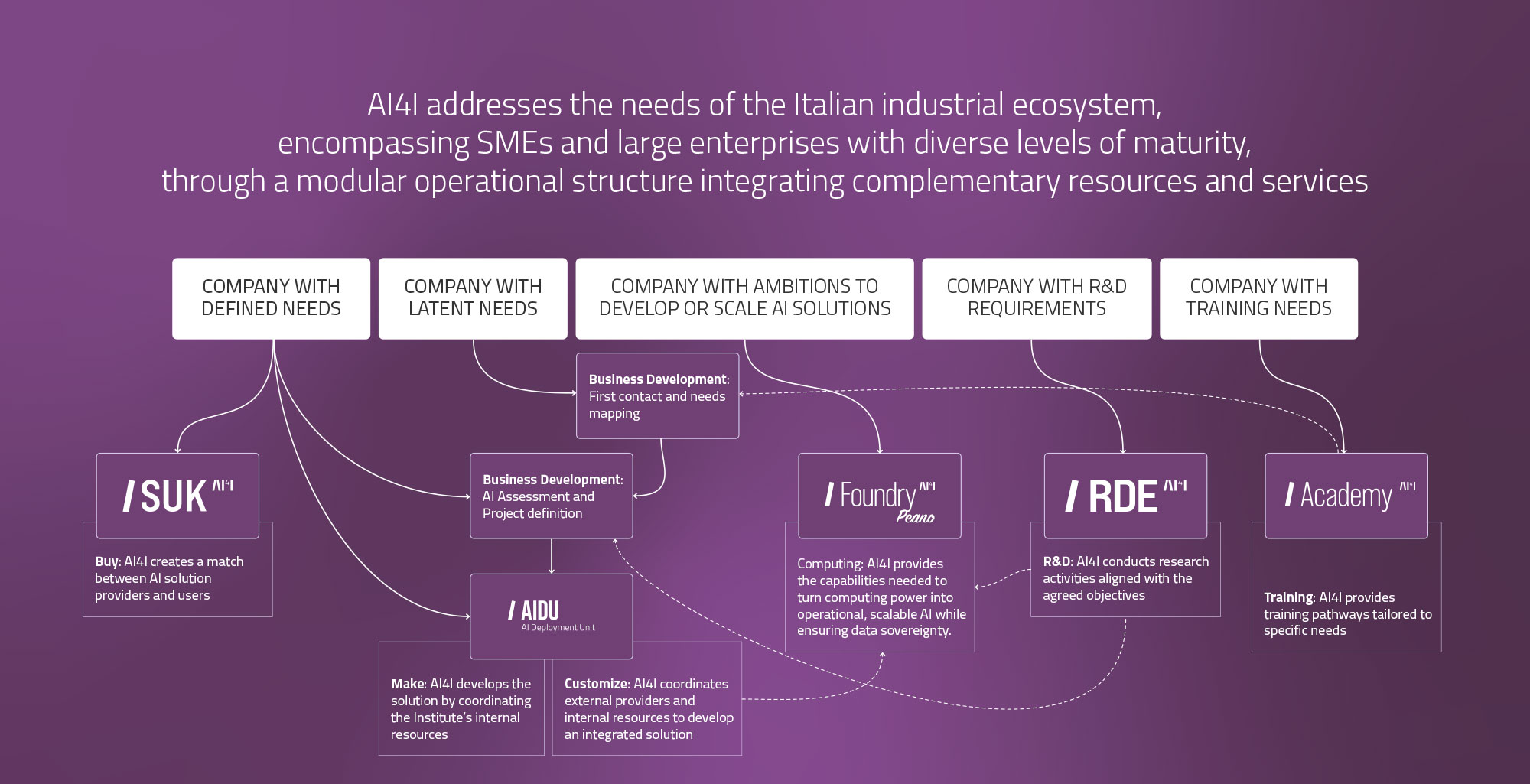
AI4I addresses a diverse industrial ecosystem, comprising large companies and SMEs with different levels of technological maturity and different needs: from identifying where and how artificial intelligence can generate value to developing new R&D projects; from finding solutions already available on the market to experimentation, development and the scaling of advanced applications
The Plan responds to these needs through a modular structure in which capabilities, infrastructure and services can be activated and combined according to each project.
AI4I
Two system-level objectives, three strategic directions
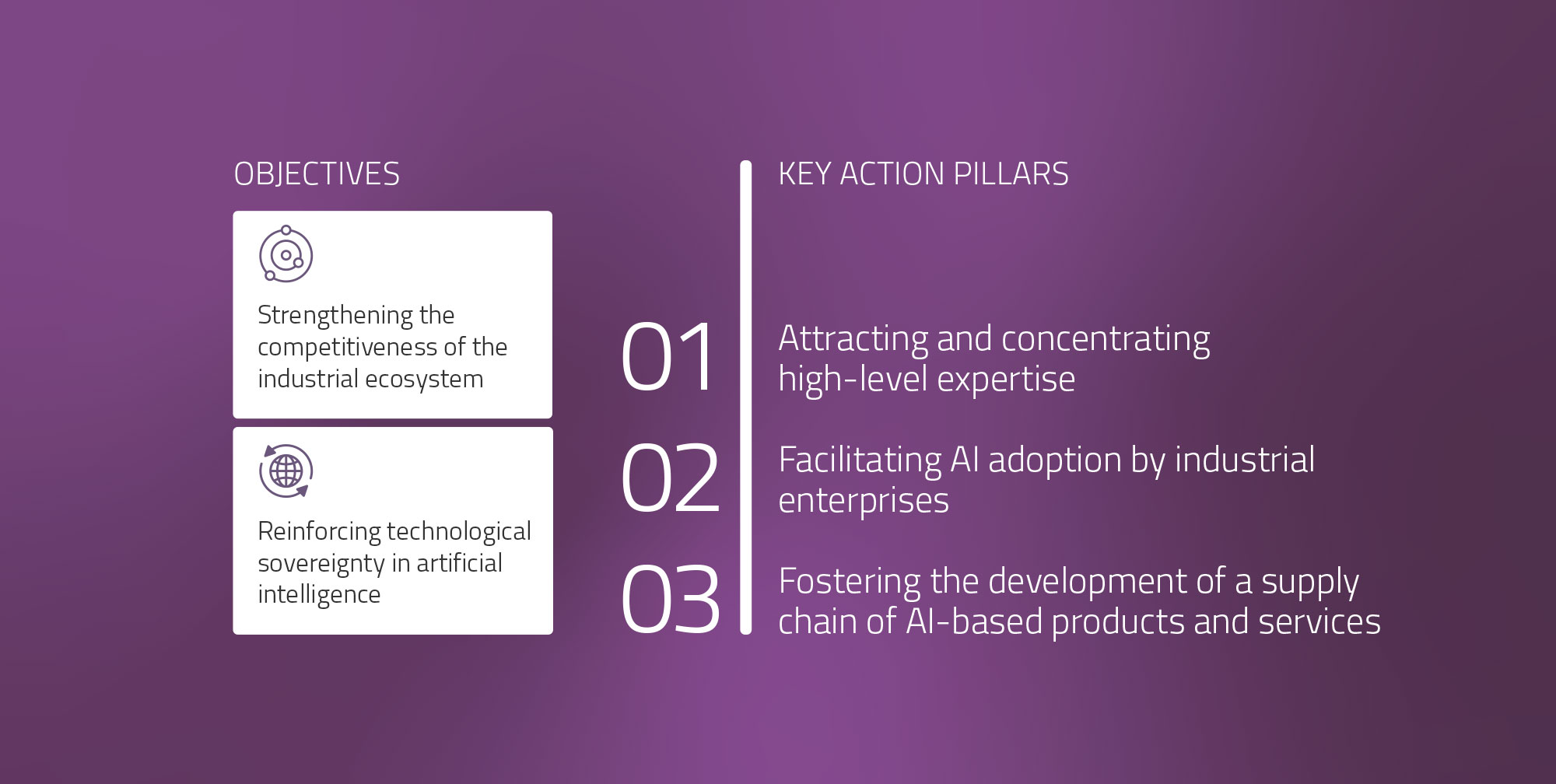
The Plan identifies two overarching objectives: strengthening the competitiveness of the industrial ecosystem and reinforcing technological sovereignty in artificial intelligence.
These objectives are pursued through three strategic directions: attracting and concentrating high-level expertise; facilitating AI adoption by industrial enterprises; and fostering the development of a supply chain of AI-based products and services.
This approach reflects a fundamental principle of the Plan: competitiveness in artificial intelligence depends on the combined availability of scientific excellence, talent, computing infrastructure, engineering capabilities and technology transfer expertise. AI4I brings these elements together within a single system, reducing the distance between research, technological development and industrial adoption.
AI4I
A full-cycle model for AI development and adoption
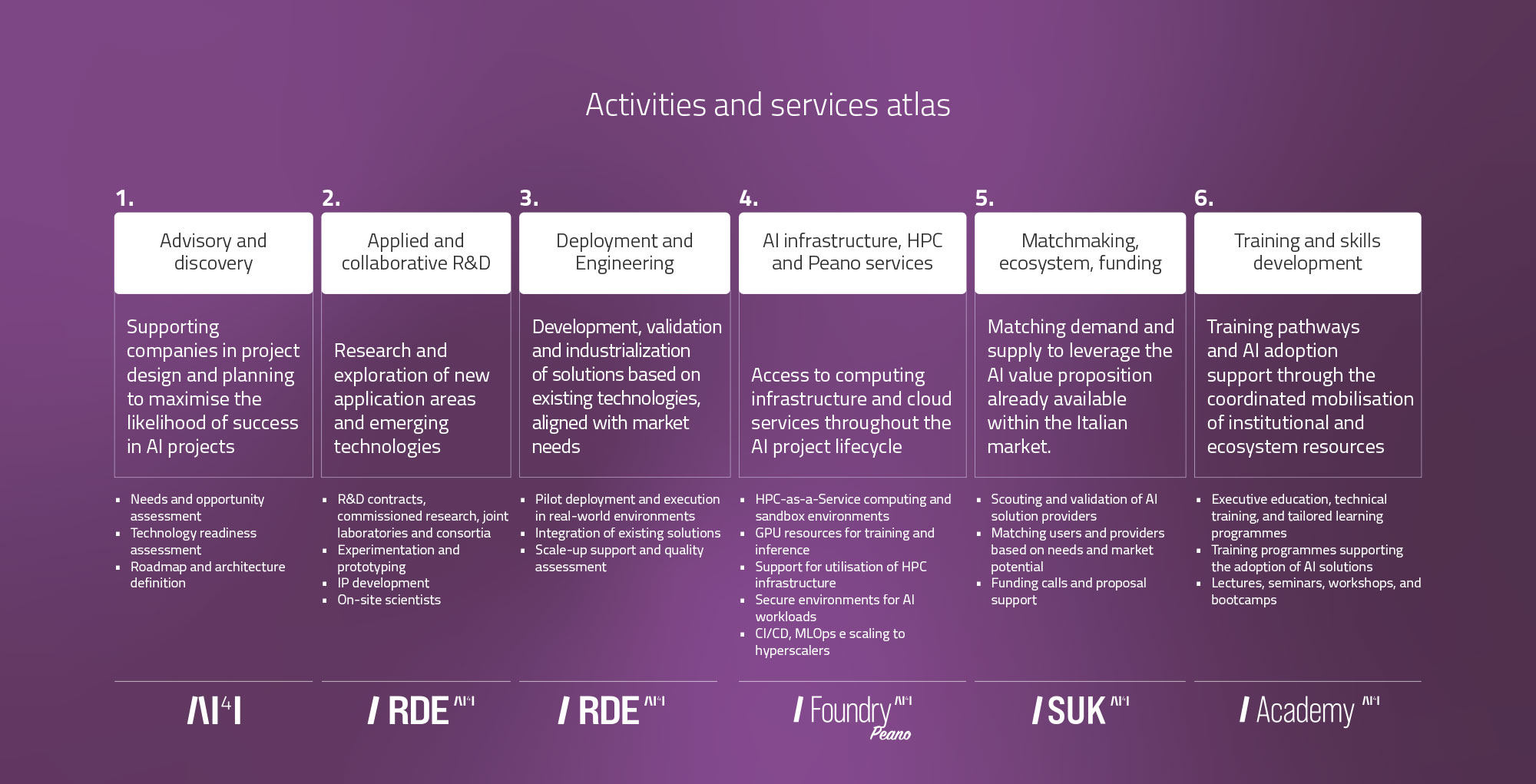
AI4I’s operating model covers the full AI development and adoption cycle. It starts with the assessment of industrial needs and technological opportunities and extends across applied and collaborative research, experimentation and prototyping, solution development and industrialisation, access to HPC and AI infrastructure, demand-supply matching, and skills development.
The model is structured around six areas of activity: advisory and discovery; applied and collaborative R&D; deployment and engineering; AI infrastructure, HPC and Peano services; matchmaking, ecosystem and funding; and training and skills development.
This modular approach enables AI4I to respond to different levels of technological maturity and different types of industrial demand. Depending on the specific need, the Institute can conduct dedicated R&D activities, directly develop a solution by coordinating internal capabilities, integrate internal resources with external providers, identify existing market solutions, provide computing capabilities, or design dedicated training pathways.
AI4I
An integrated architecture: connecting capabilities, infrastructure and ecosystem
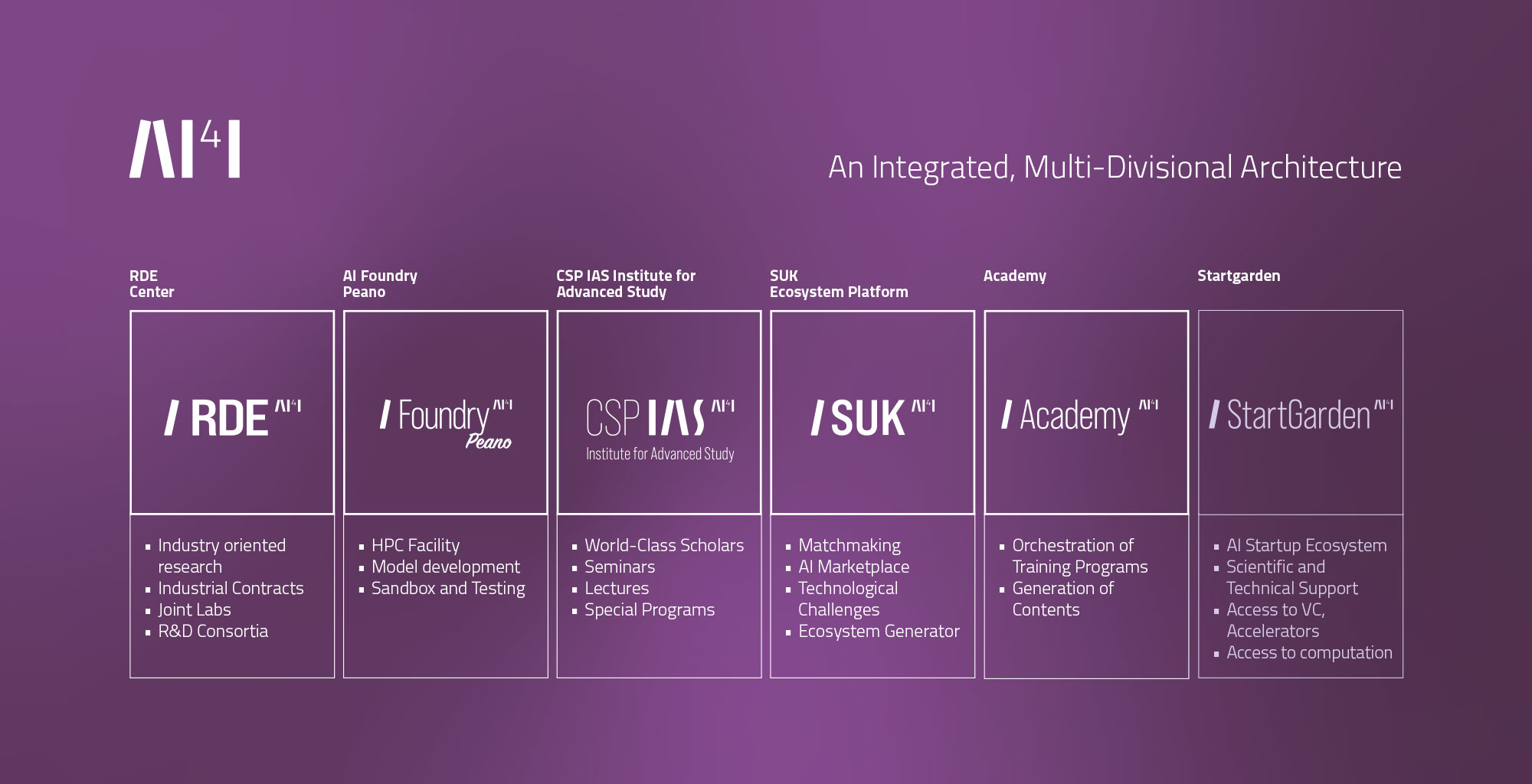
The Strategic Plan translates this model into an integrated, multi-divisional architecture in which research, infrastructure, expertise and services operate as interconnected components of the same system.
The Research, Development and Engineering Center, AI Foundry Peano, Institute for Advanced Study, SUK Ecosystem Platform, Academy and StartGarden perform distinct but complementary functions, spanning scientific research, technology development and engineering, computing, advanced knowledge and training, demand-supply matching and innovation valorisation.
Together, these components provide AI4I with the capabilities required to operate across the entire AI value chain, while creating multiple points of access for companies, researchers, technology providers and other actors in the innovation ecosystem.
AI4I / RDE
Research, Development and Engineering: from scientific excellence to industrial solutions

Research, Development and Engineering Center
- Industry oriented research
- Industrial Contracts
- Joint Labs
- R&D Consortia
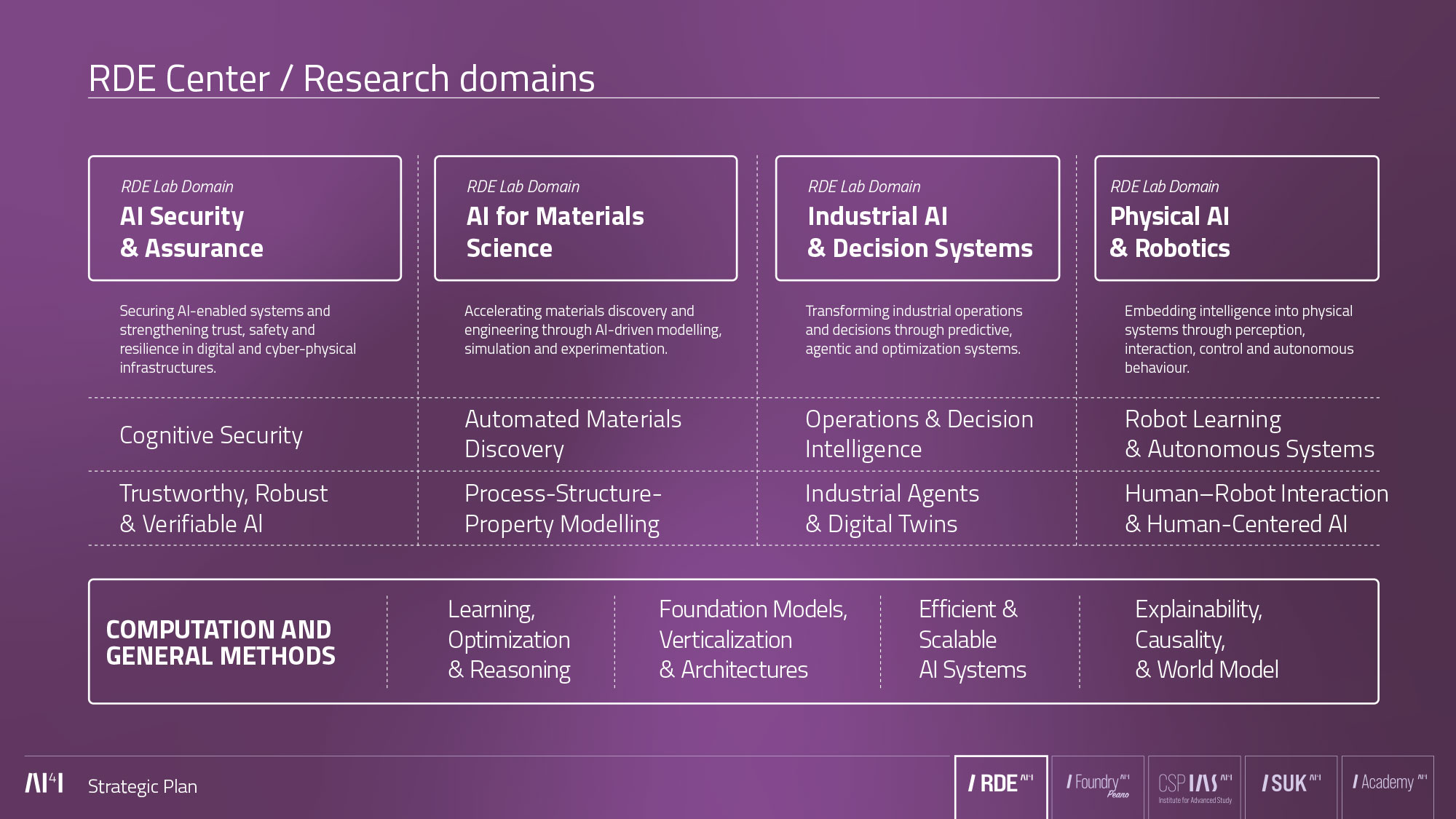
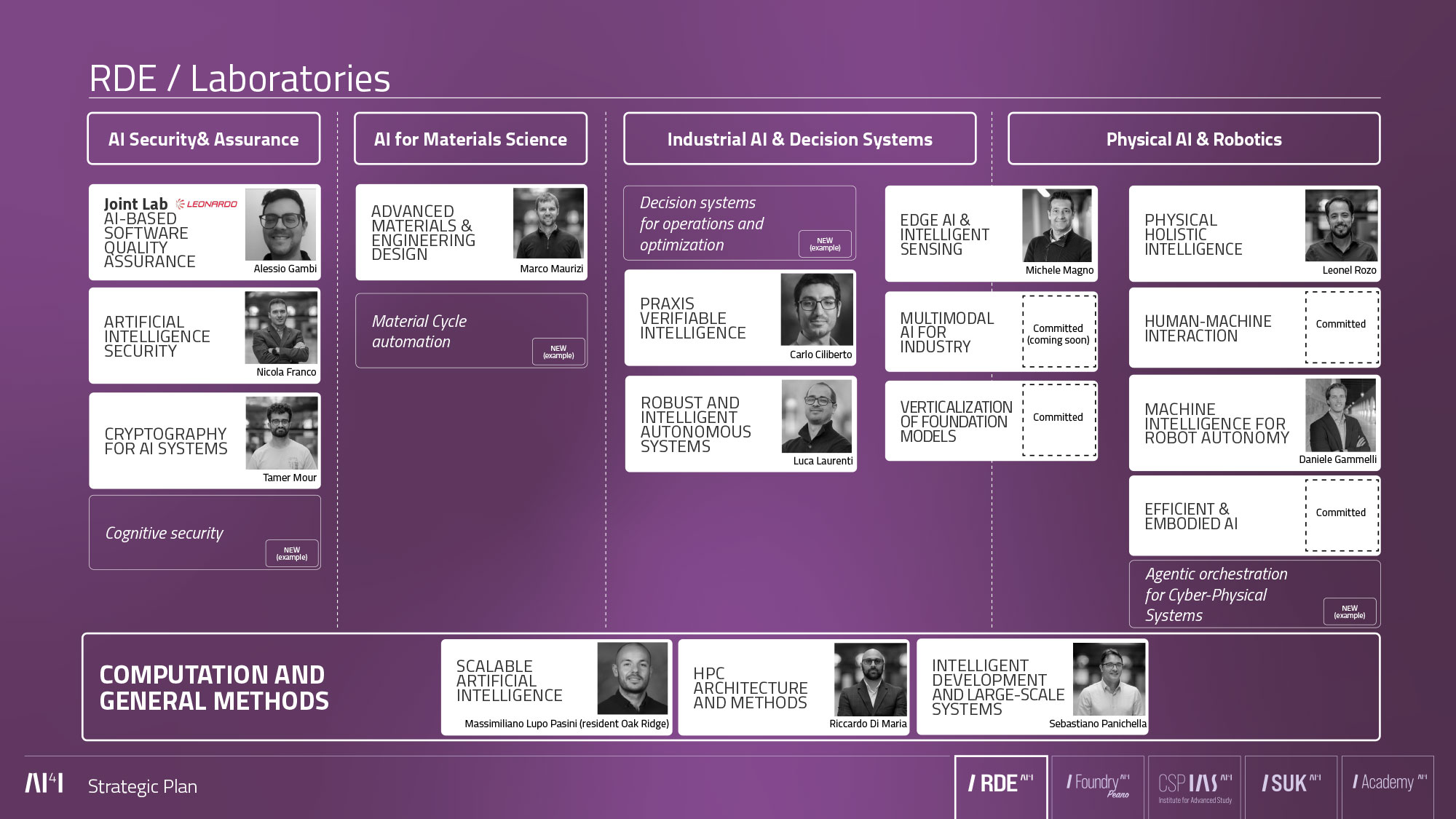
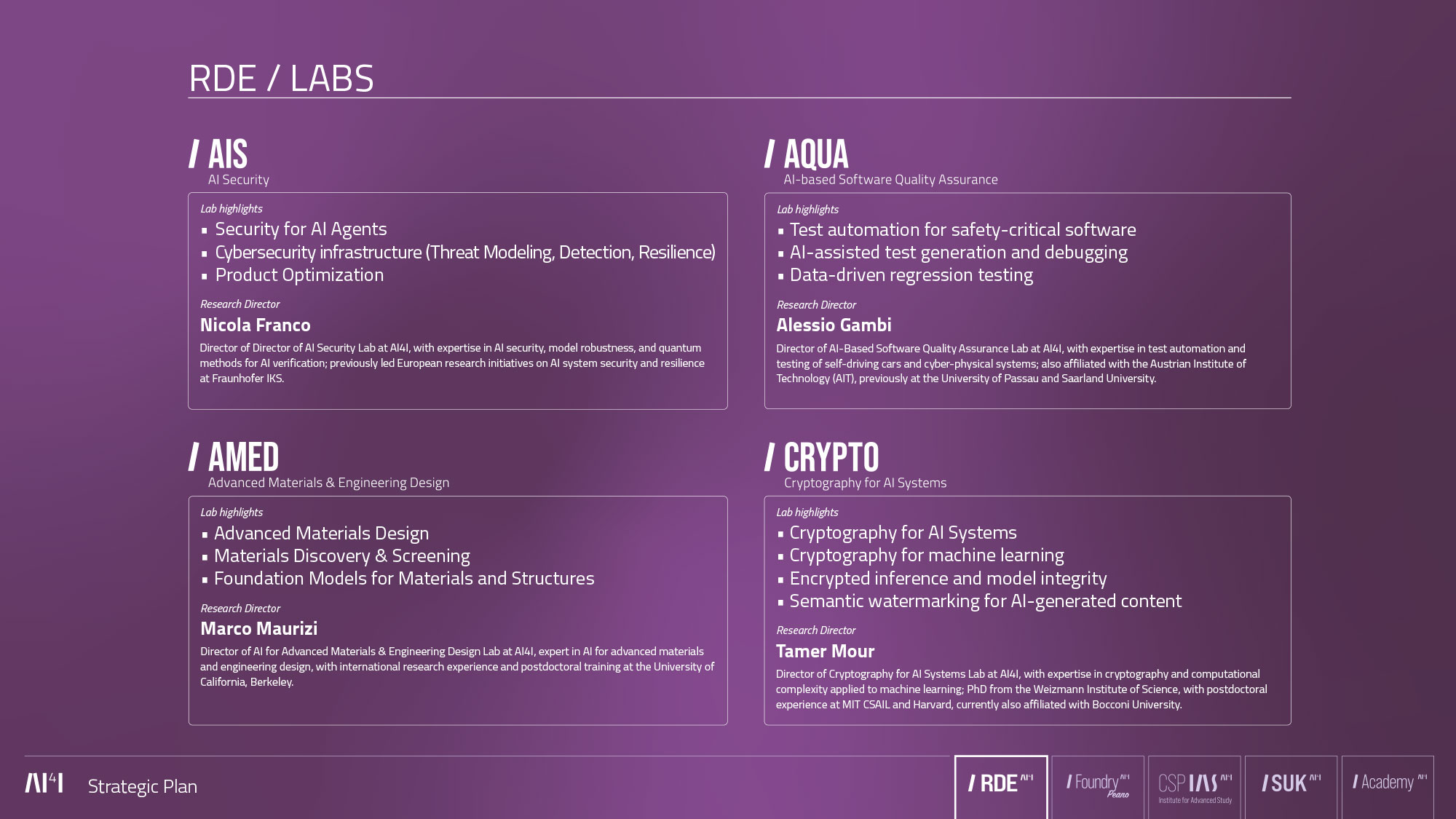
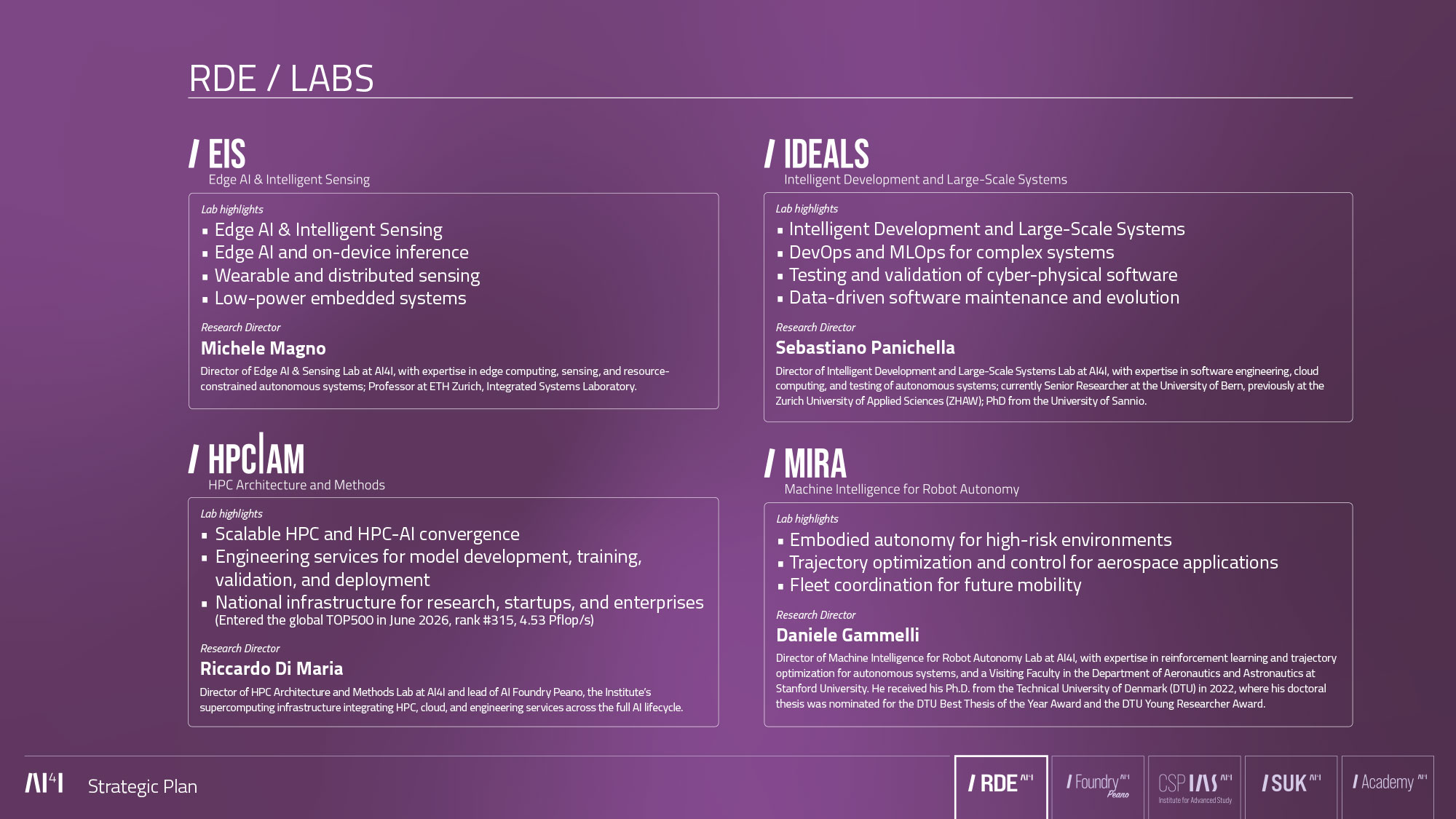
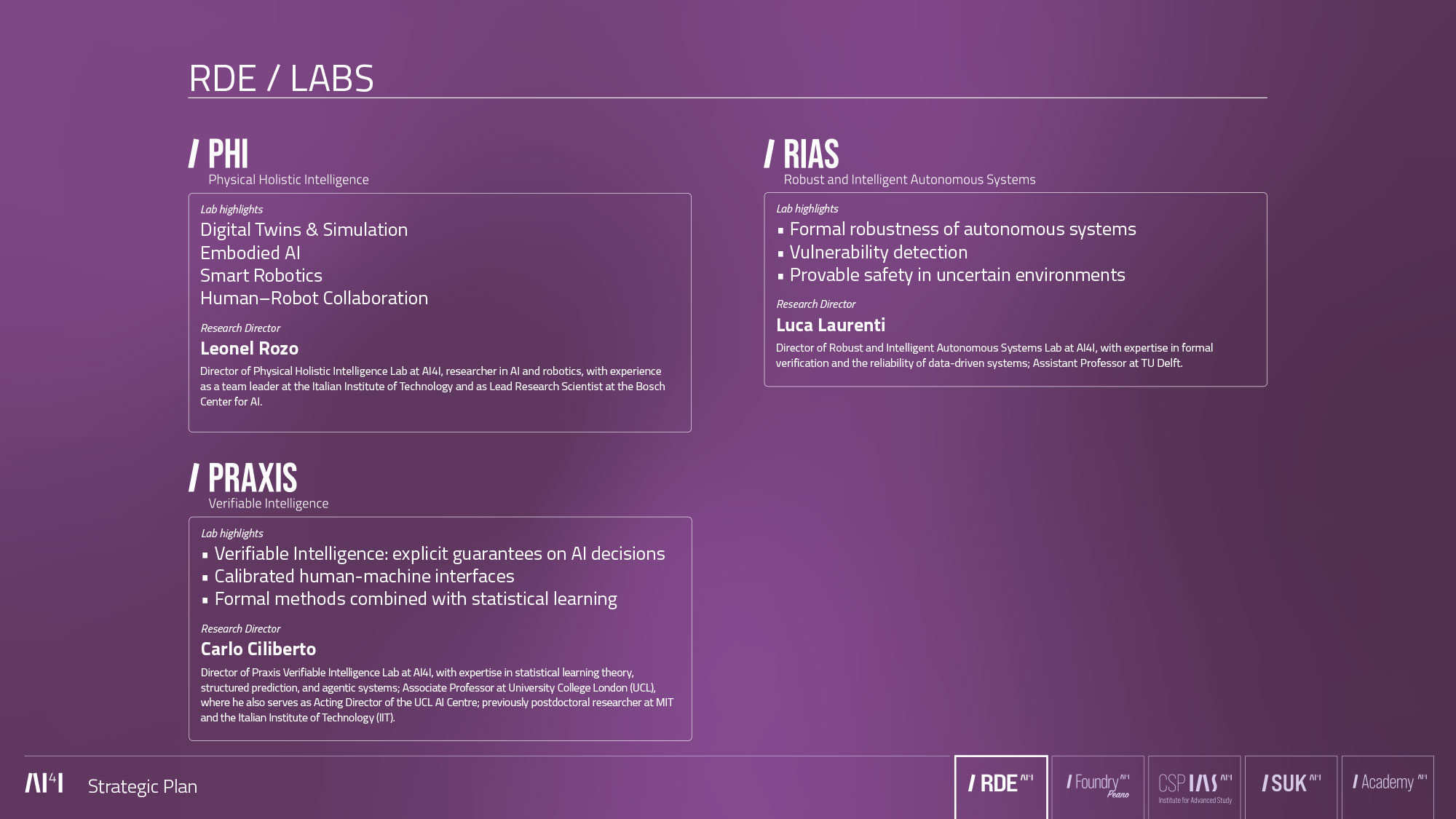
The Research, Development and Engineering Center (RDE) is the scientific and technological core of AI4I. Its laboratories conduct both industry-oriented and mission-oriented research across technological and application domains, supported by engineering and deployment capabilities.
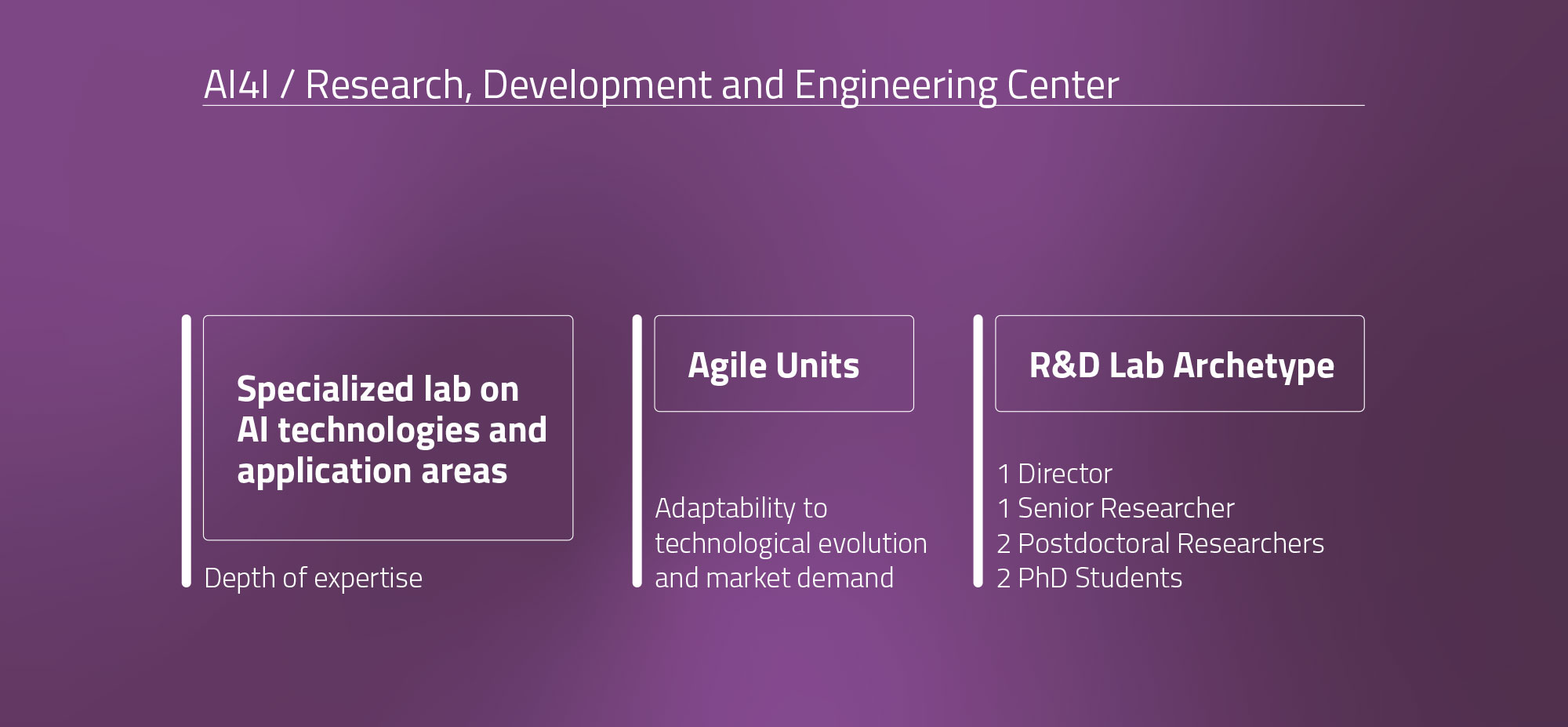
The organisational model combines specialised expertise with the ability to adapt to technological evolution and changing industrial demand. R&D Labs are conceived as agile units with a strong scientific focus, while the broader RDE structure provides the capabilities required to move from research to experimentation, engineering and deployment.
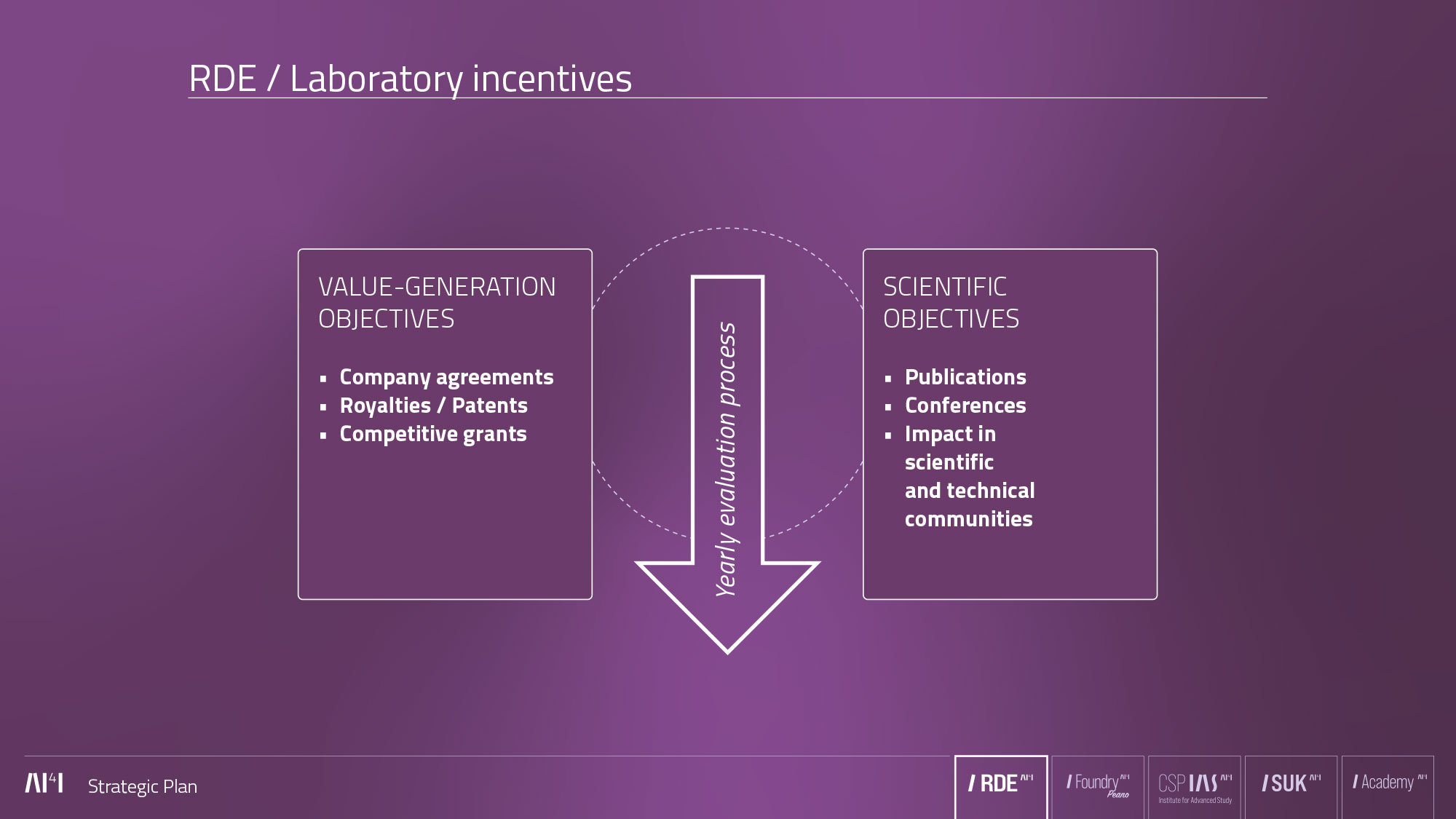
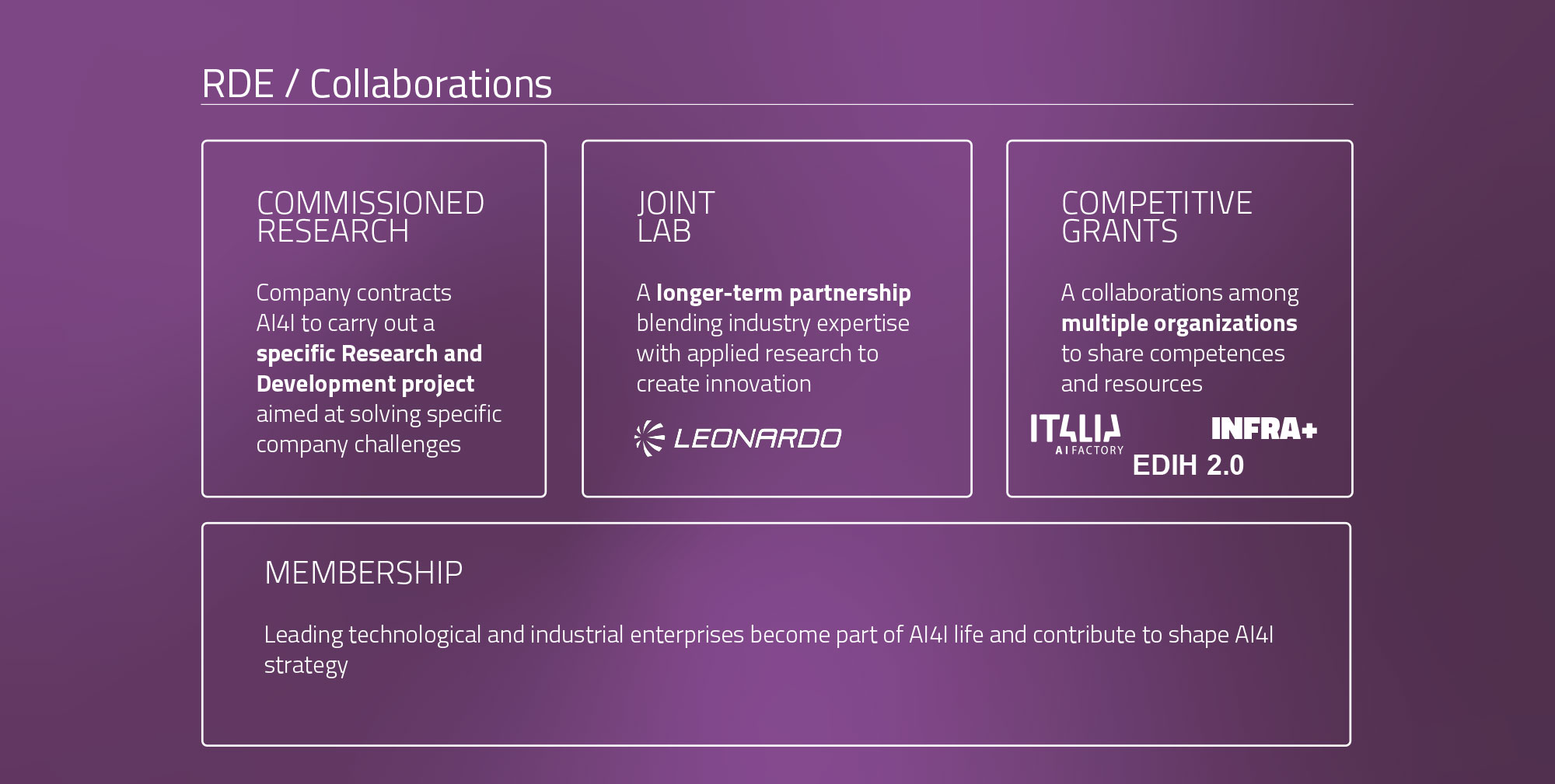
Collaboration with industry is an integral part of this model. Commissioned research, Joint Labs, R&D consortia and competitive projects provide different mechanisms for bringing together AI4I’s scientific capabilities and industrial expertise, addressing specific technological challenges and supporting the development of new intellectual property and applications.
AI4I / Foundry Peano
AI Foundry Peano: Computing power as an industrial capability

AI Foundry Peano
- HPC Facility
- Model development
- Testing Sandbox
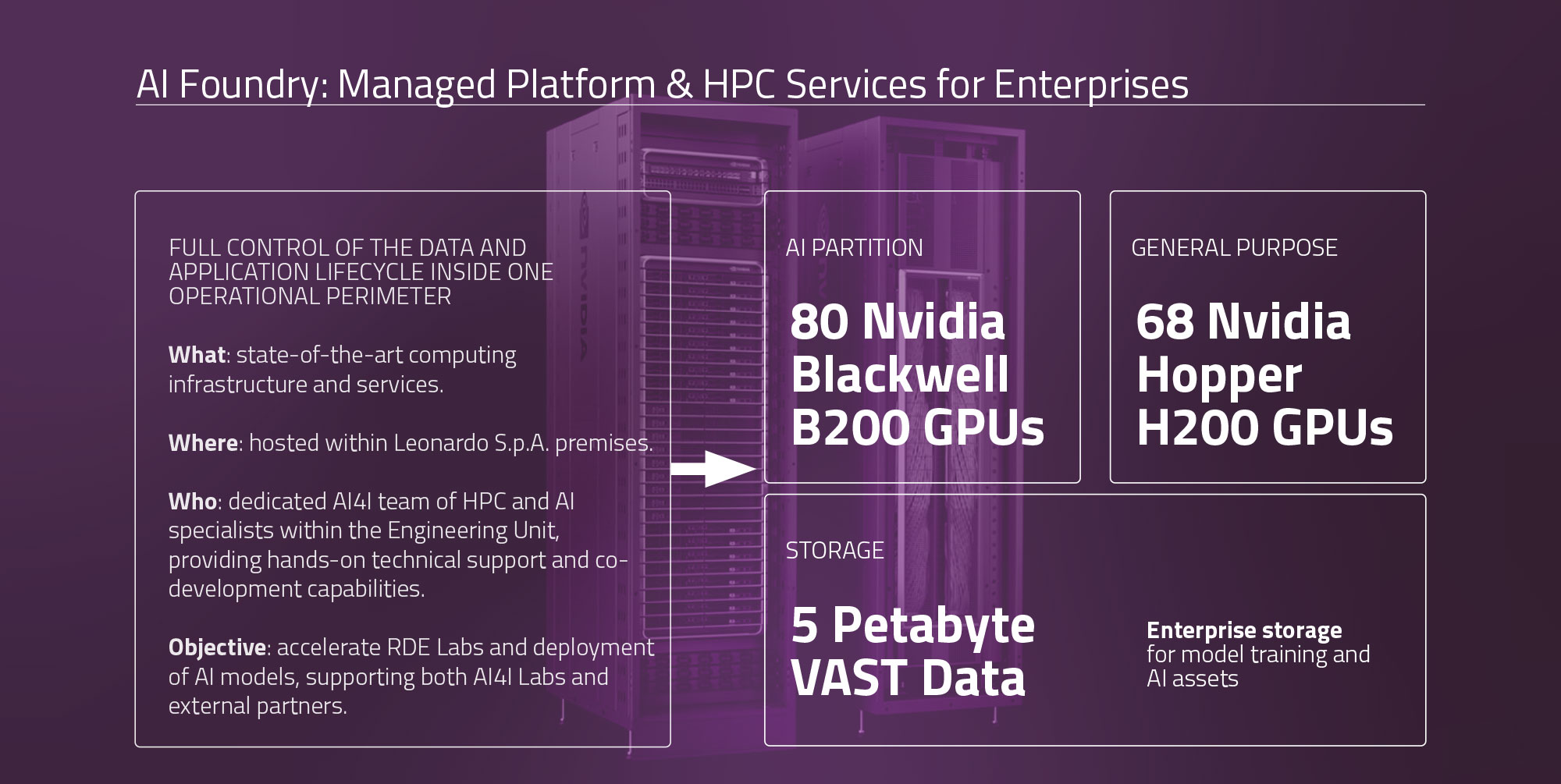
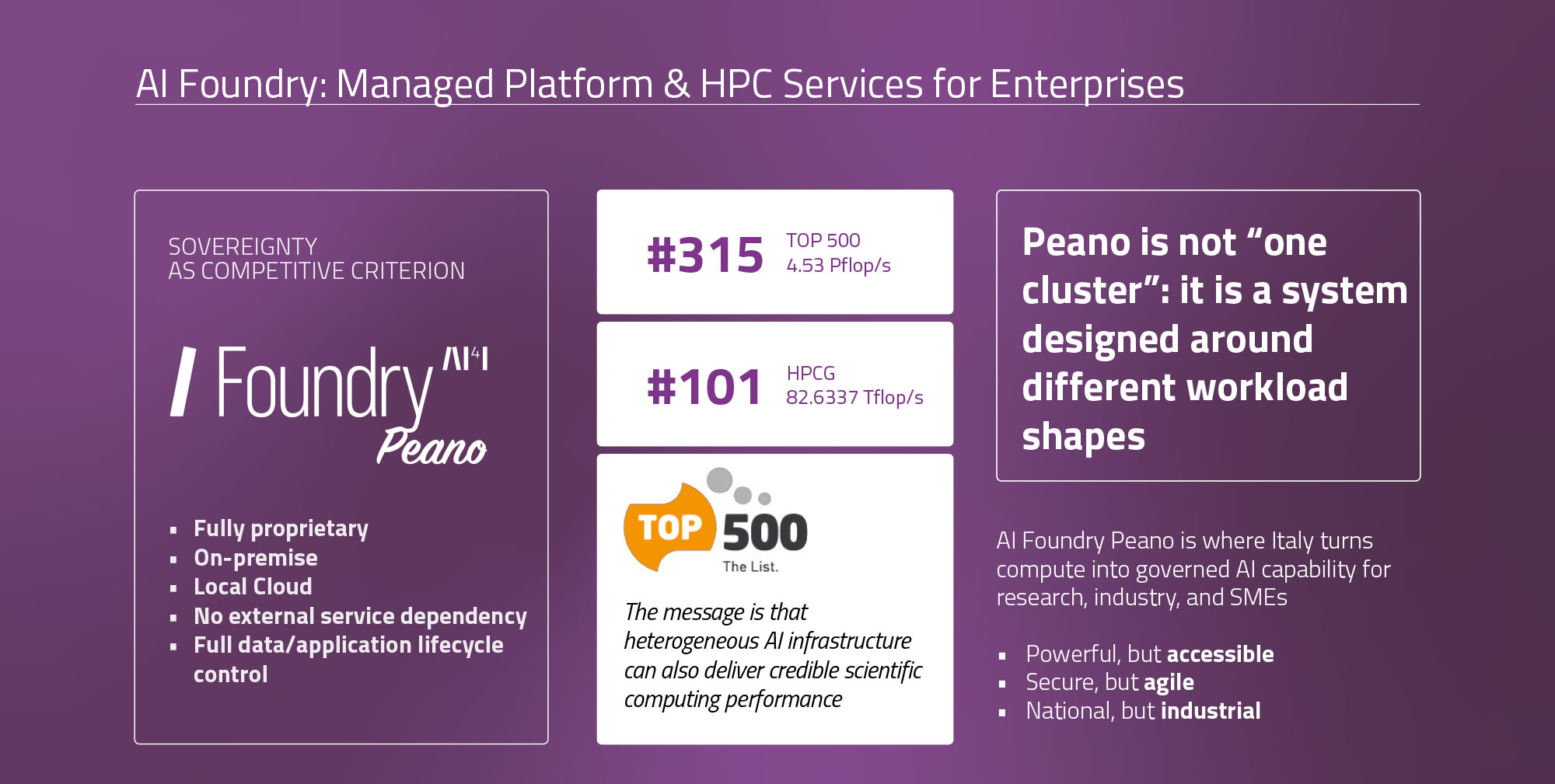
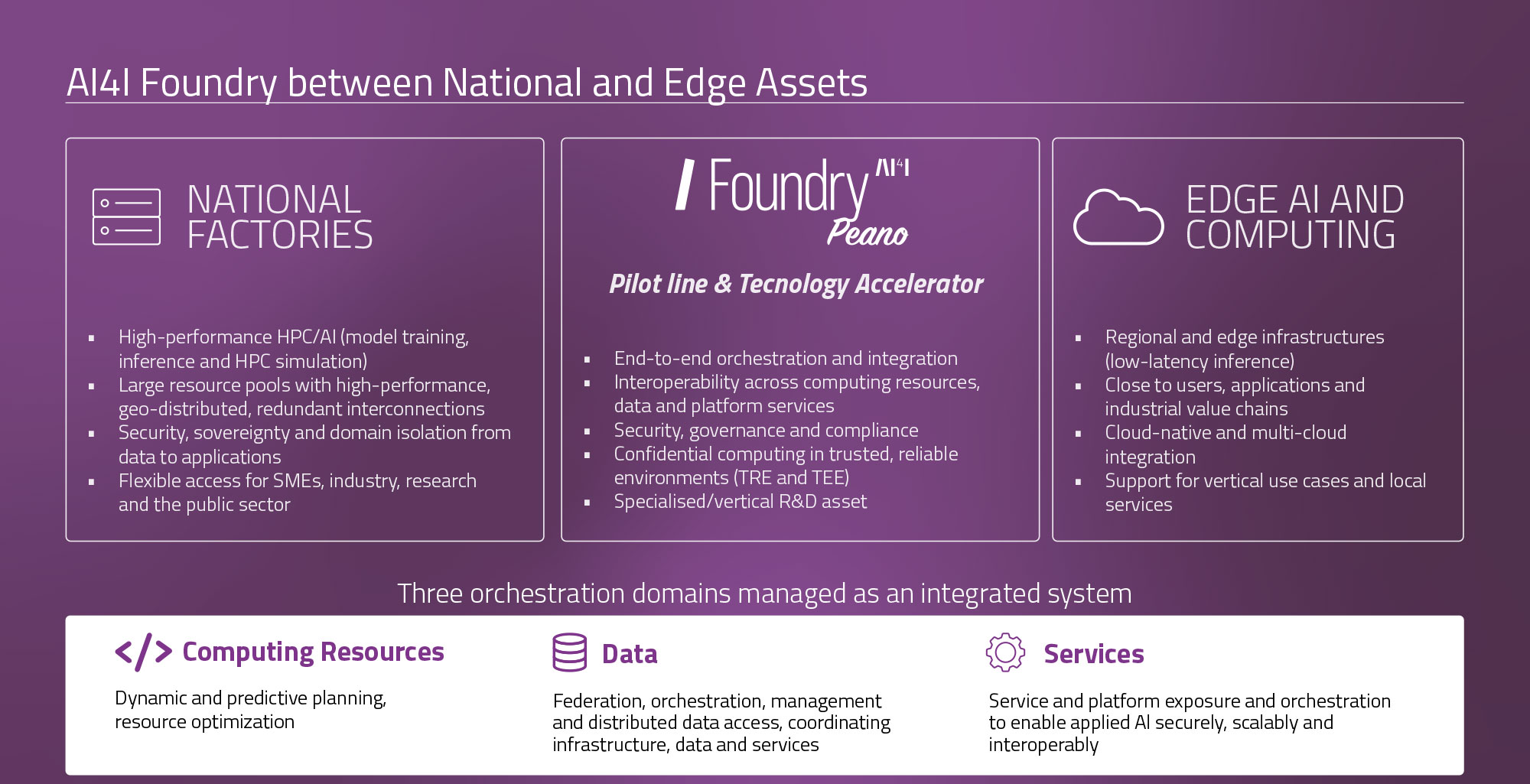
AI Foundry Peano is AI4I’s HPC and AI infrastructure, designed to turn computing power into an operational capability for research and industry.
The Foundry integrates high-performance computing, AI infrastructure, development environments and specialised engineering services across the entire application lifecycle. It supports model development, training and inference, experimentation, testing, validation and scaling, while maintaining control over data and applications within a governed operational perimeter.
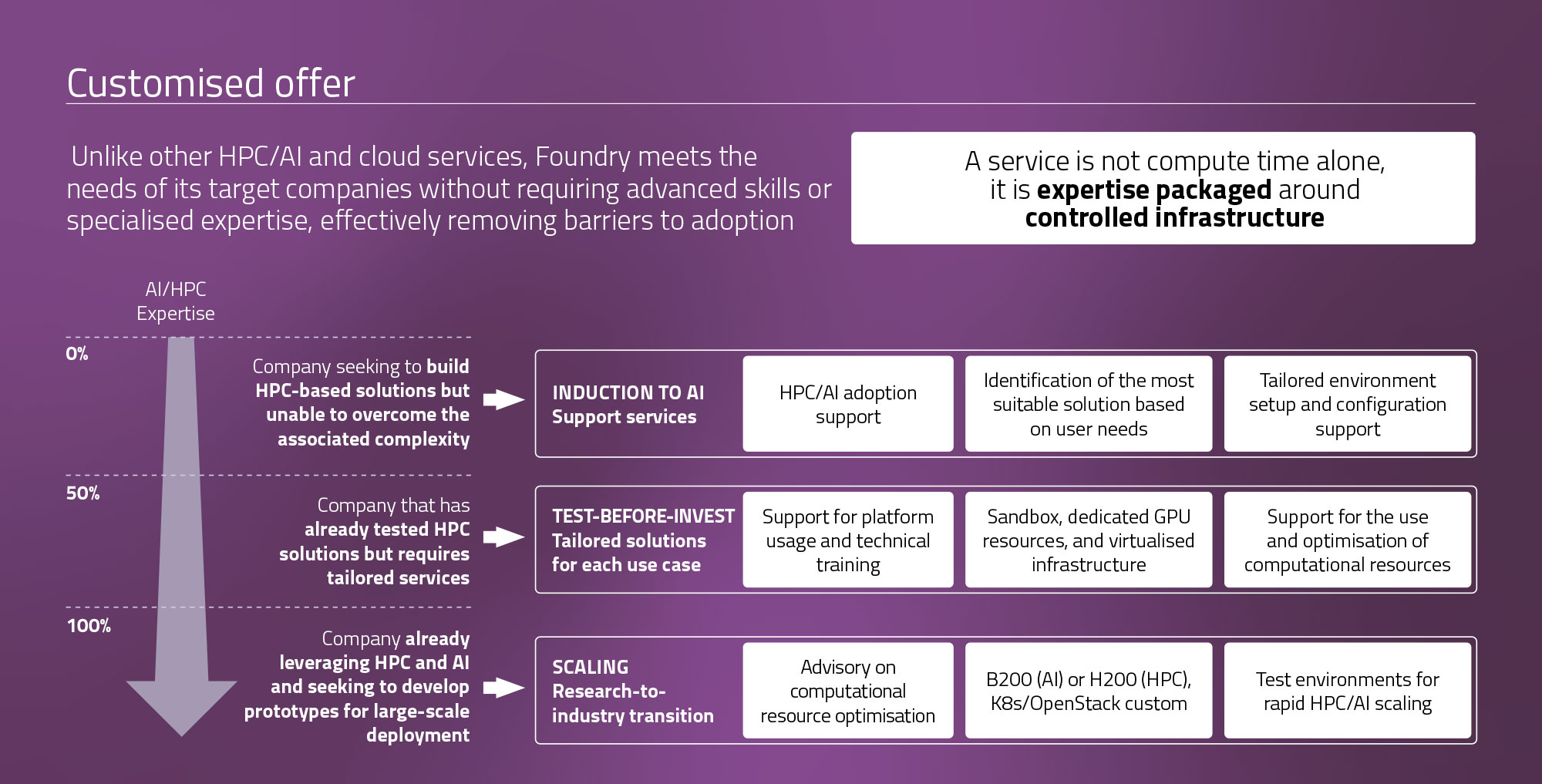
Its operating model goes beyond access to computing resources. A dedicated team of HPC and AI specialists provides technical support and co-development capabilities, enabling companies to access advanced infrastructure even when they do not have specialised internal expertise. In this model, computing becomes a managed service combining infrastructure, engineering and expertise to support the transition from experimentation to industrial-scale deployment.
Technological sovereignty is an integral part of this approach: the infrastructure is designed around control of the data and application lifecycle, security and the ability to operate AI workloads within a trusted environment.
AI4I / CSP IAS
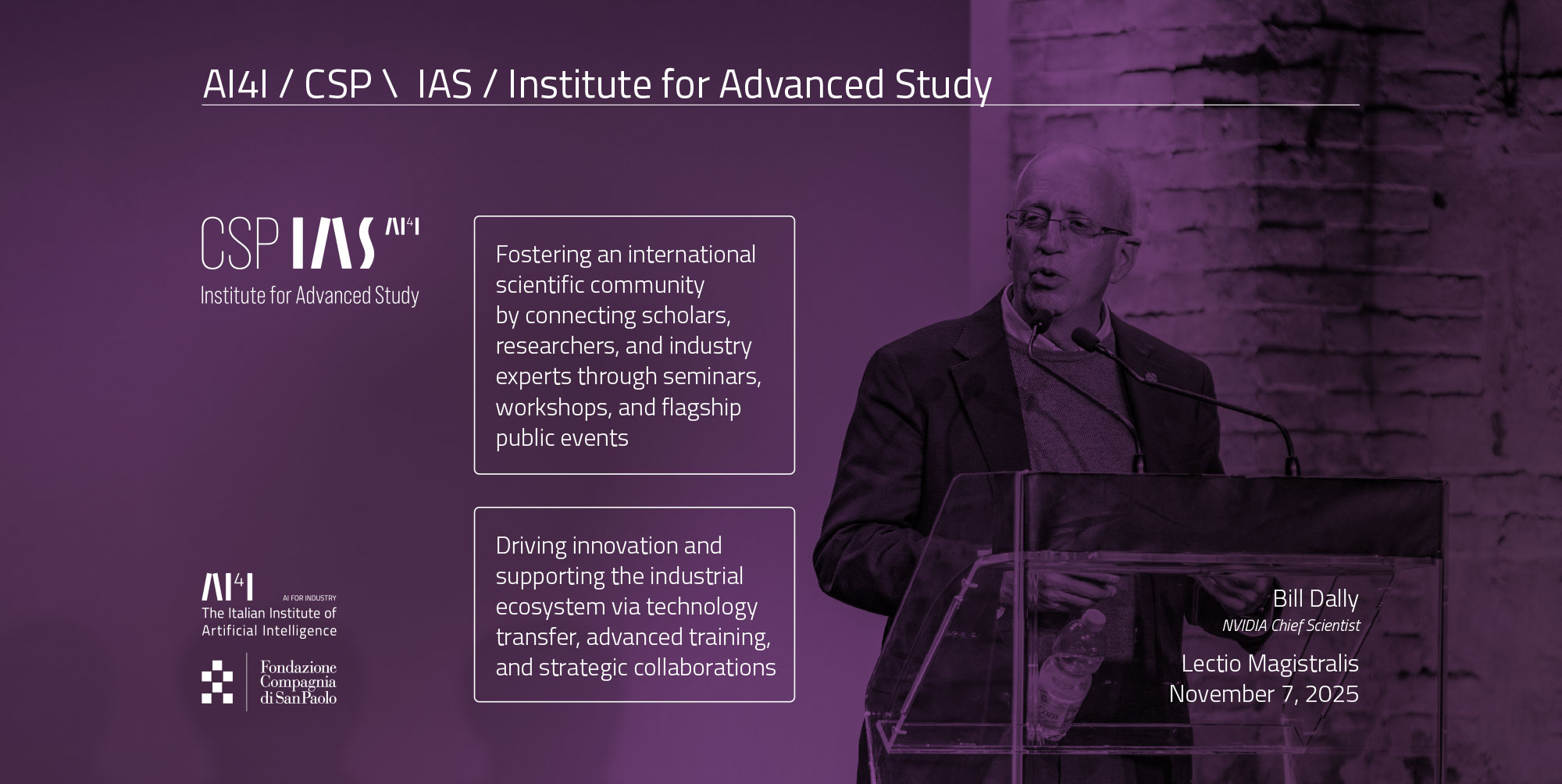
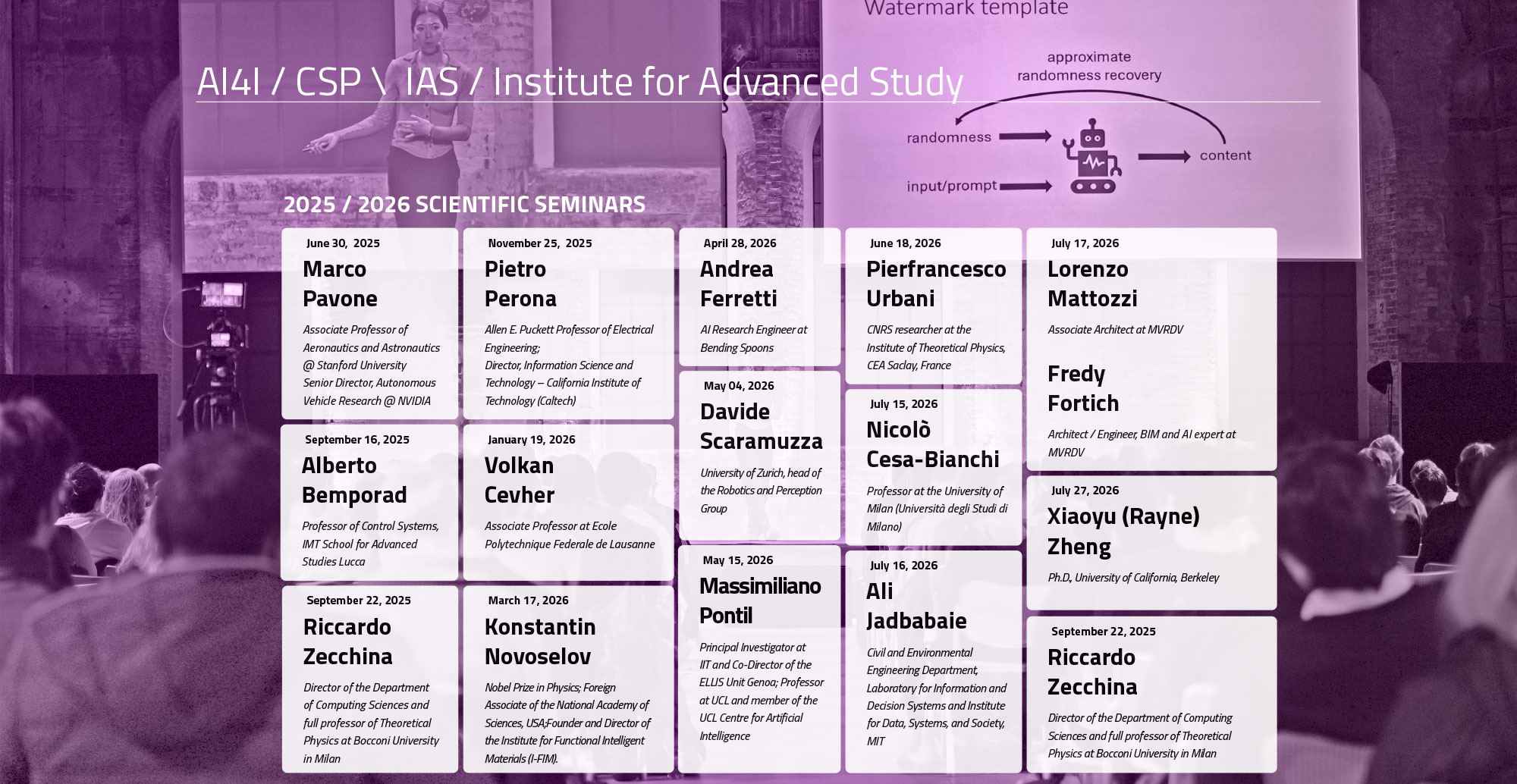
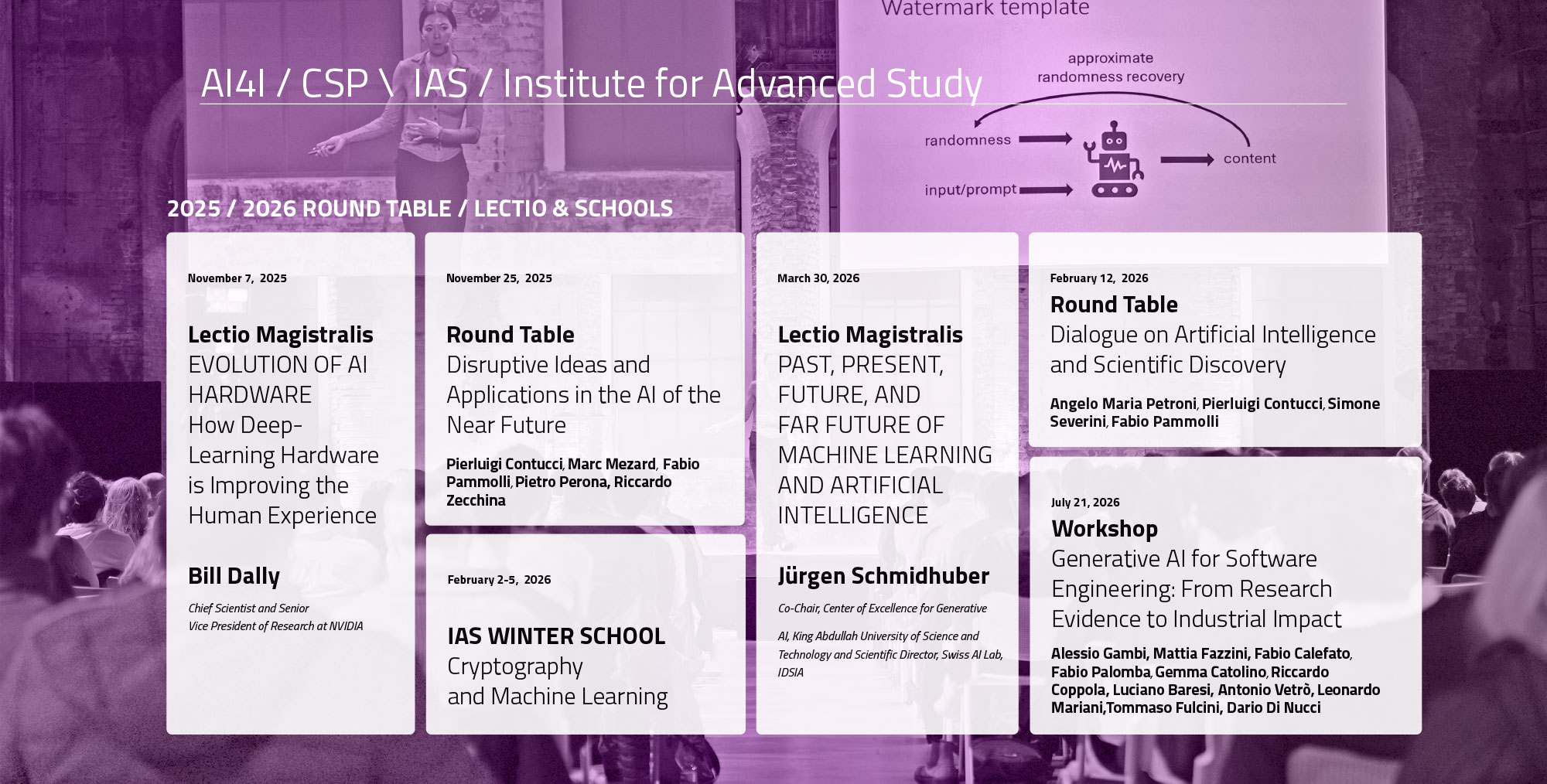
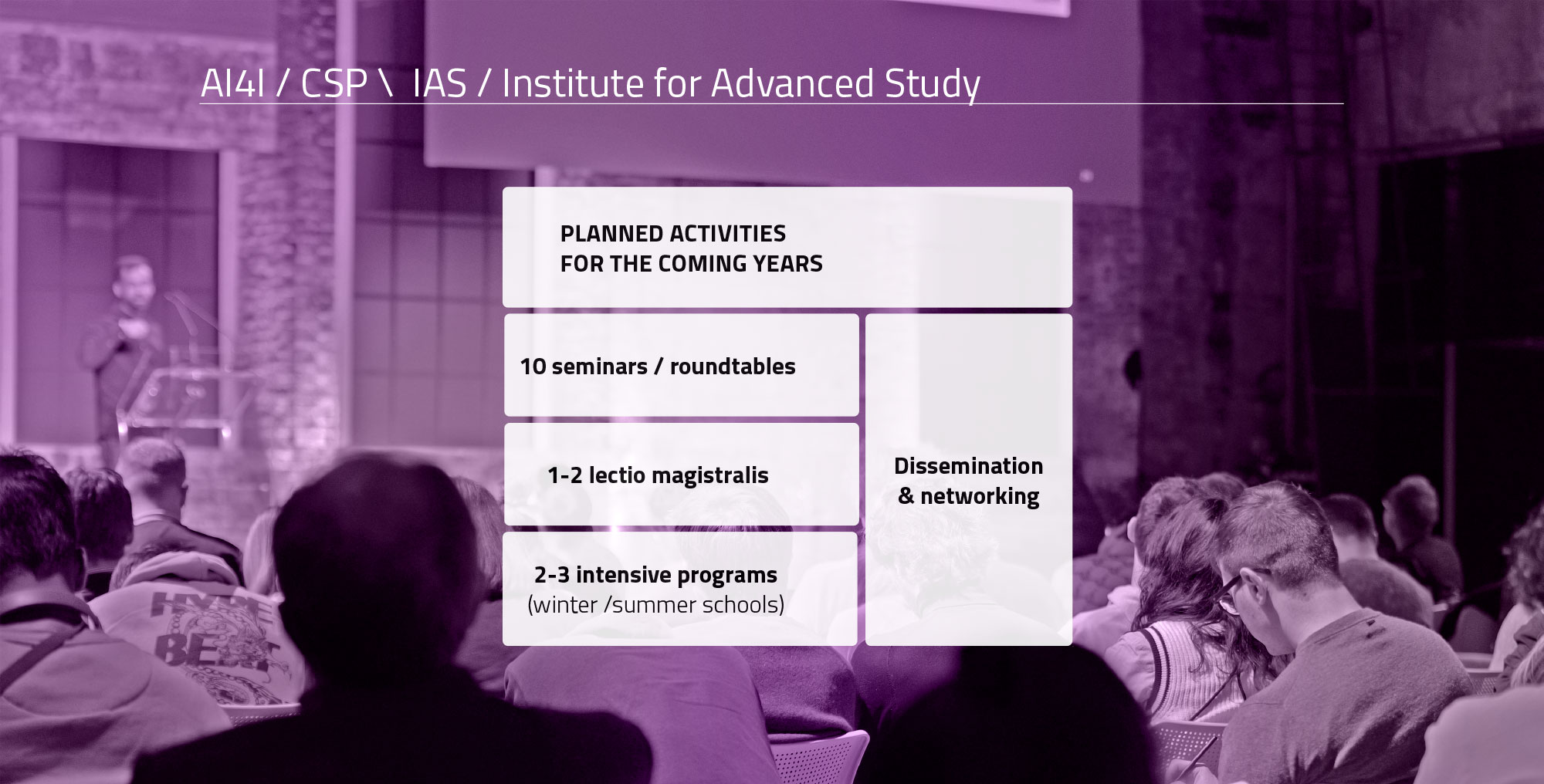
Institute for Advanced Study: Connecting AI4I to the international research frontier

CSP IAS Institute for Advanced Study
- World-Class Scholars
- Seminars
- Lectures
- Special Programs
AI Foundry Peano is AI4I’s HPC and AI infrastructure, designed to turn computing power into an operational capability for research and industry.
The Foundry integrates high-performance computing, AI infrastructure, development environments and specialised engineering services across the entire application lifecycle. It supports model development, training and inference, experimentation, testing, validation and scaling, while maintaining control over data and applications within a governed operational perimeter.
Its operating model goes beyond access to computing resources. A dedicated team of HPC and AI specialists provides technical support and co-development capabilities, enabling companies to access advanced infrastructure even when they do not have specialised internal expertise. In this model, computing becomes a managed service combining infrastructure, engineering and expertise to support the transition from experimentation to industrial-scale deployment.
Technological sovereignty is an integral part of this approach: the infrastructure is designed around control of the data and application lifecycle, security and the ability to operate AI workloads within a trusted environment.
AI4I / SUK
SUK Ecosystem Platform: Building a trusted market for AI solutions

SUK – The AI Marketplace
- Matchmaking
- AI Marketplace
- Technological Challenges
- Ecosystem Generator
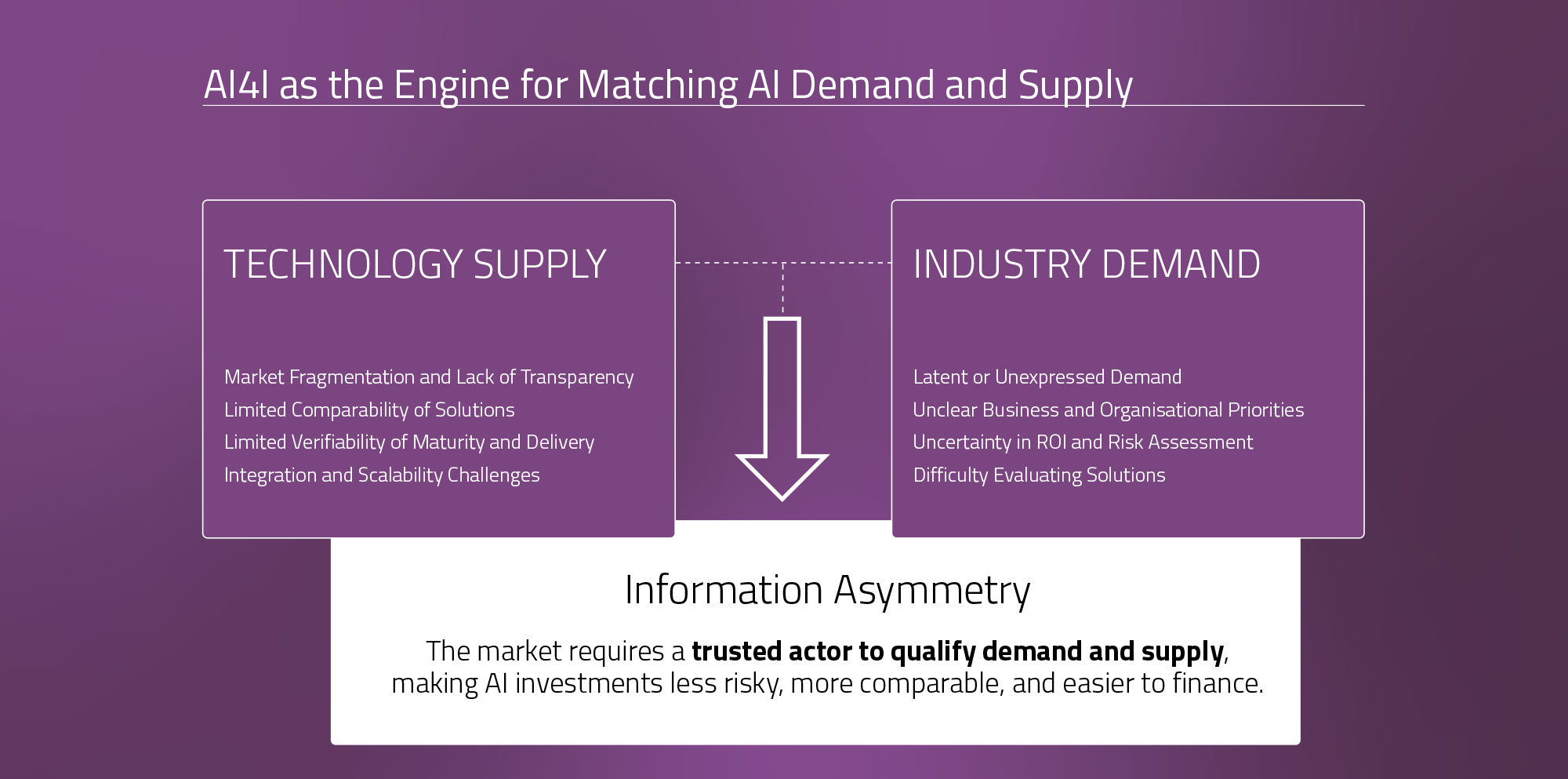
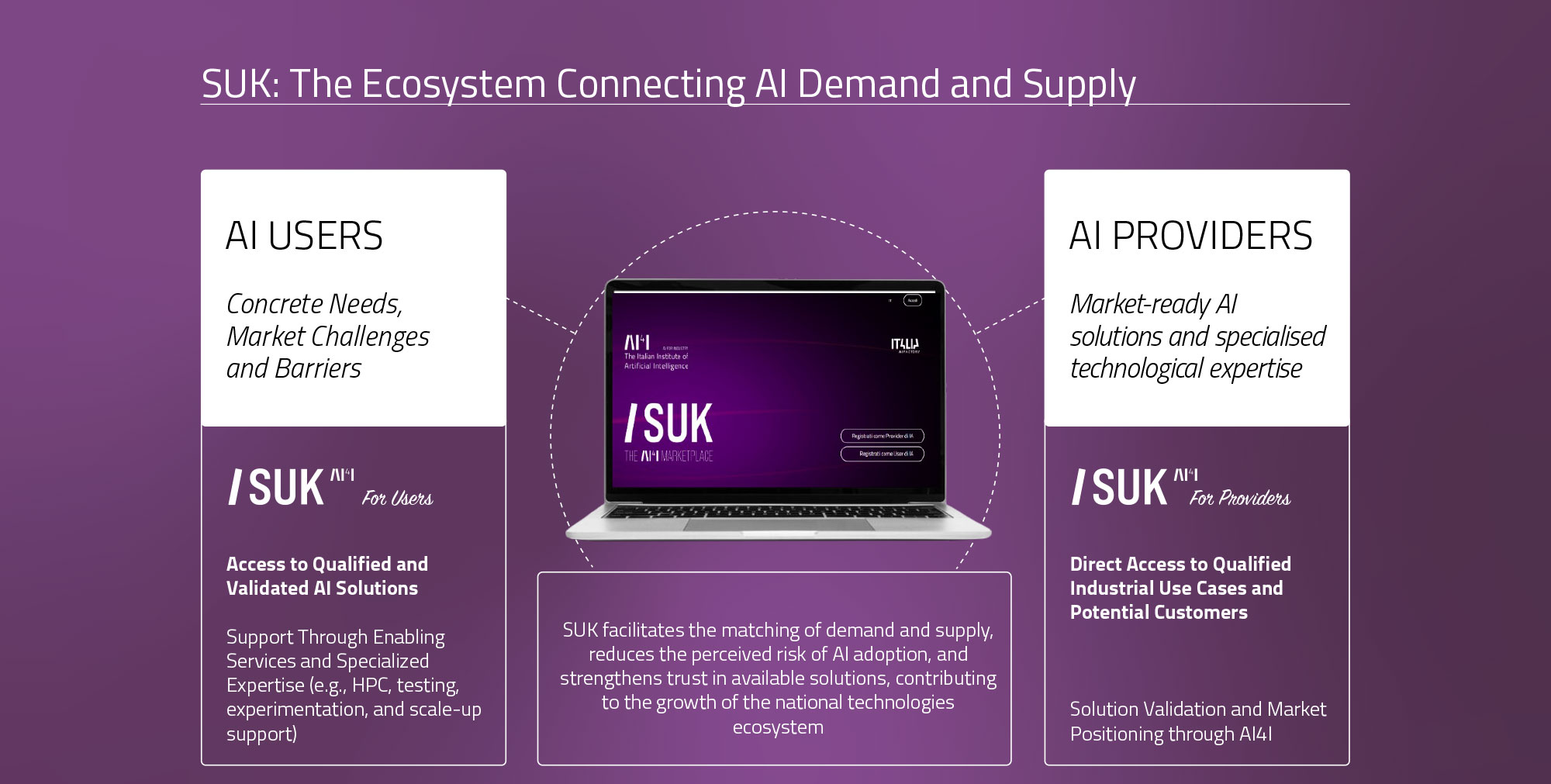
SUK is the ecosystem platform through which AI4I connects industrial demand with technology supply.
It addresses one of the structural barriers to AI adoption: the information asymmetry between companies seeking to identify, compare and assess technologies and a fragmented supply market in which the maturity, scalability and delivery capabilities of available solutions can be difficult to evaluate. On the demand side, companies may face latent or unexpressed needs, unclear priorities and uncertainty regarding returns and implementation risks.
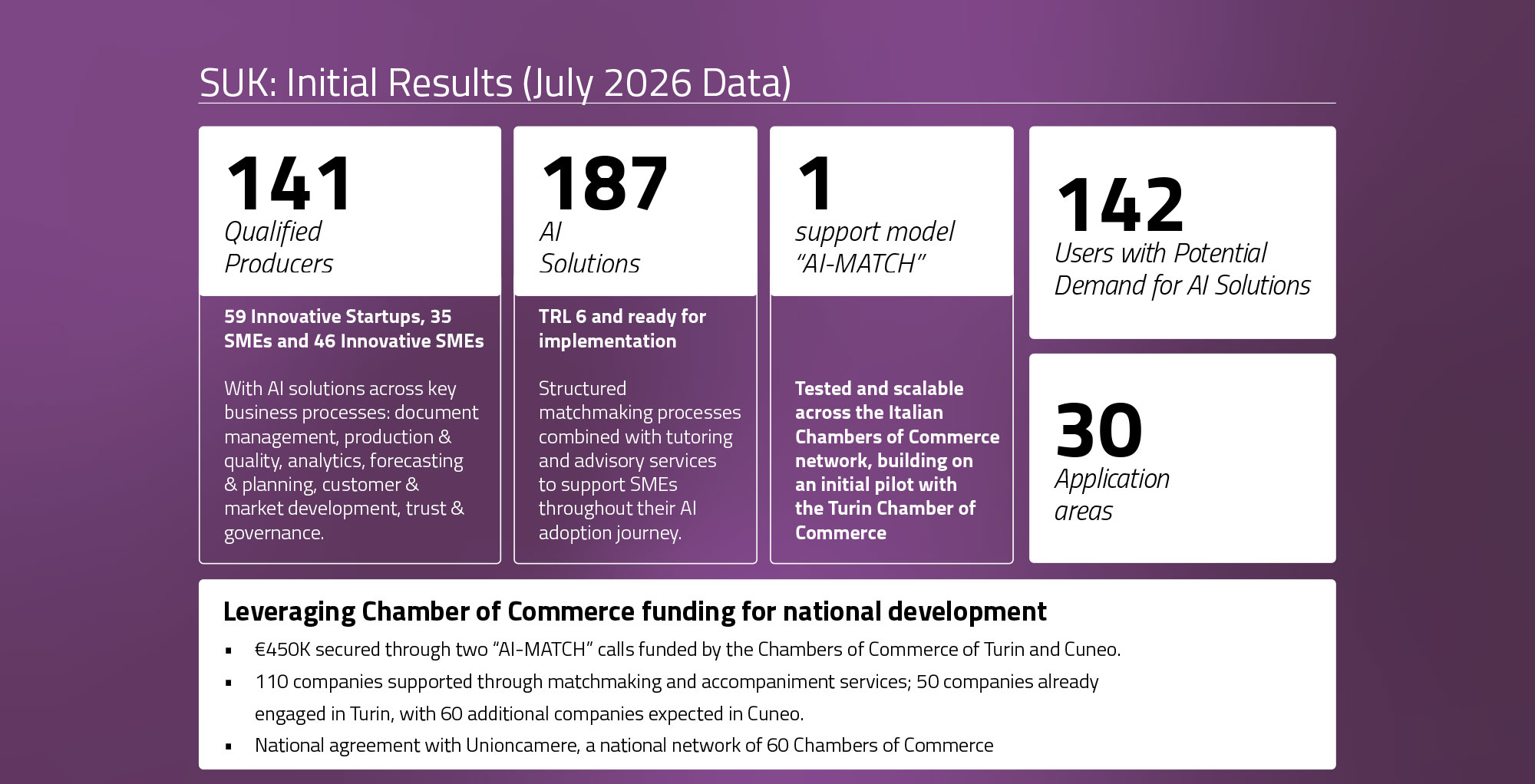
SUK acts on both sides of this market. For users, it provides access to qualified and validated AI solutions and specialised expertise. For providers, it creates access to qualified industrial use cases and potential customers while supporting solution validation and market positioning.
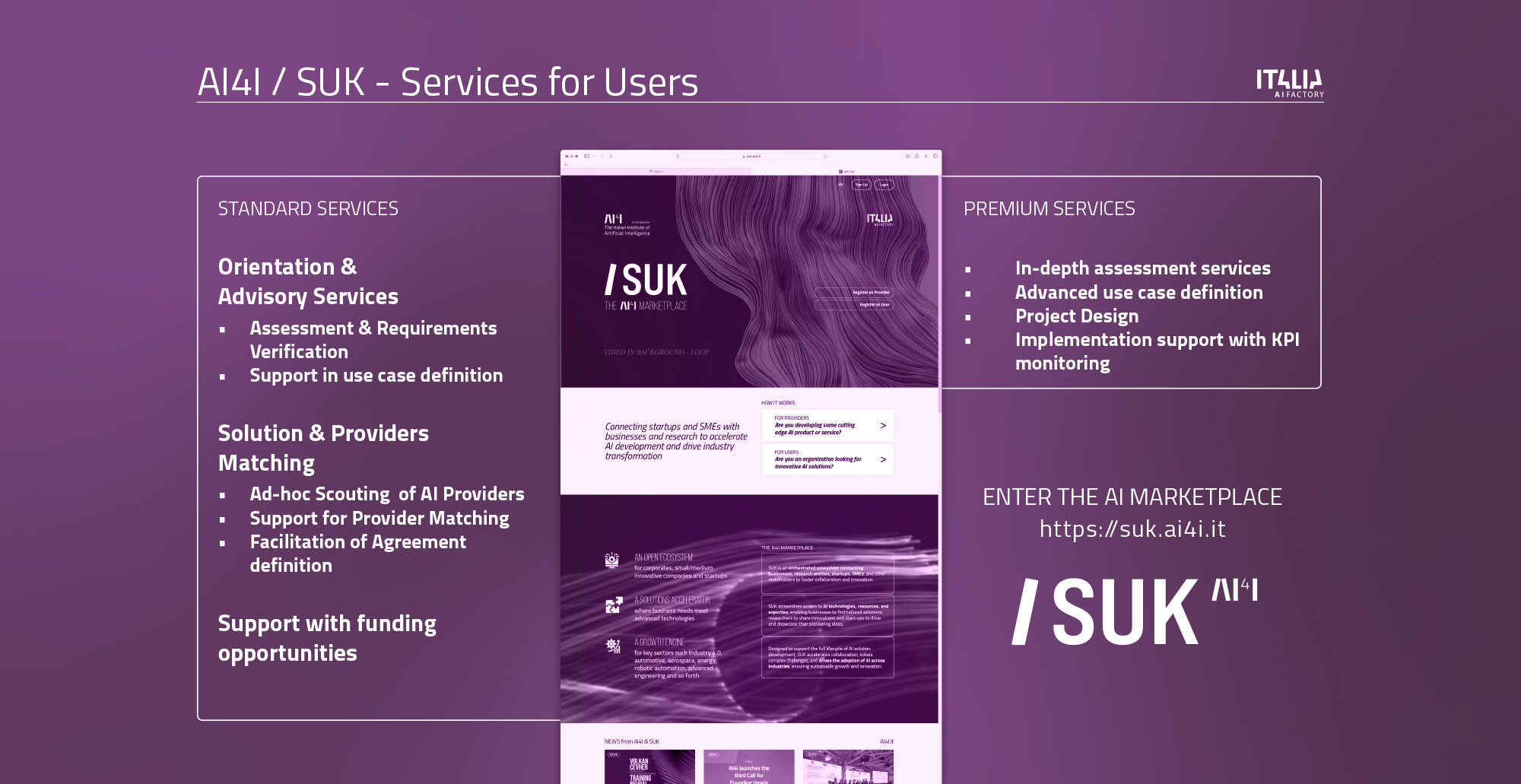
Through assessment, use-case definition, provider scouting, matching and implementation support, the platform is designed to make AI investments less risky, more comparable and easier to implement, while contributing to the development of a stronger national technology ecosystem.
AI4I / Academy
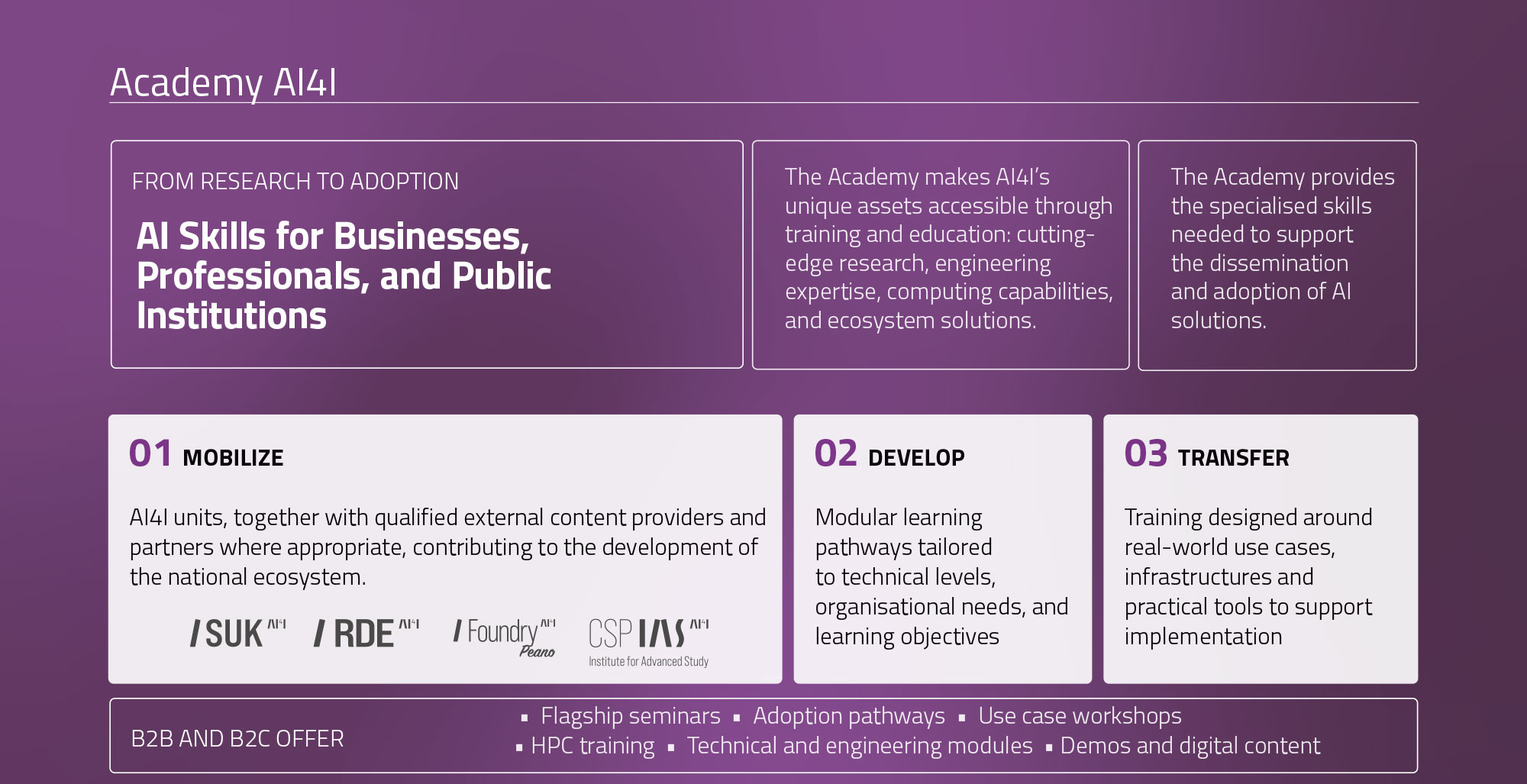
AI4I Academy: Building the skills required for AI adoption

Academy
- Orchestration of Training Programs
- Generation of Contents
AI4I Academy addresses the skills dimension of technological transformation. The Strategic Plan recognises that access to technology alone is not sufficient to drive adoption: organisations also need the capabilities required to assess, implement and integrate AI into their processes.
The Academy therefore combines executive education, technical training and tailored learning programmes, together with seminars, workshops and bootcamps. Training programmes can be connected directly to adoption pathways, allowing skills development to accompany technological assessment and implementation.
The Academy operates by mobilising AI4I’s internal expertise and the wider scientific and industrial ecosystem, making skills development an integral component of the Institute’s technology transfer model.
AI4I / Startgarden
StartGarden: turning innovation into new entrepreneurial capacity

Startgarden
StartGarden completes AI4I’s architecture by focusing on the development of the AI startup ecosystem and the valorisation of scientific and technological innovation.
The model combines scientific and technical support, access to computing capabilities, and connections with venture capital and accelerators, providing an environment in which technologies and research outcomes can develop into new entrepreneurial initiatives.
In this way, AI4I extends its role beyond research and technology transfer to support the creation and growth of new technology supply, contributing to the development of a more structured and competitive national AI ecosystem.
AI4I
A lean and efficient structure

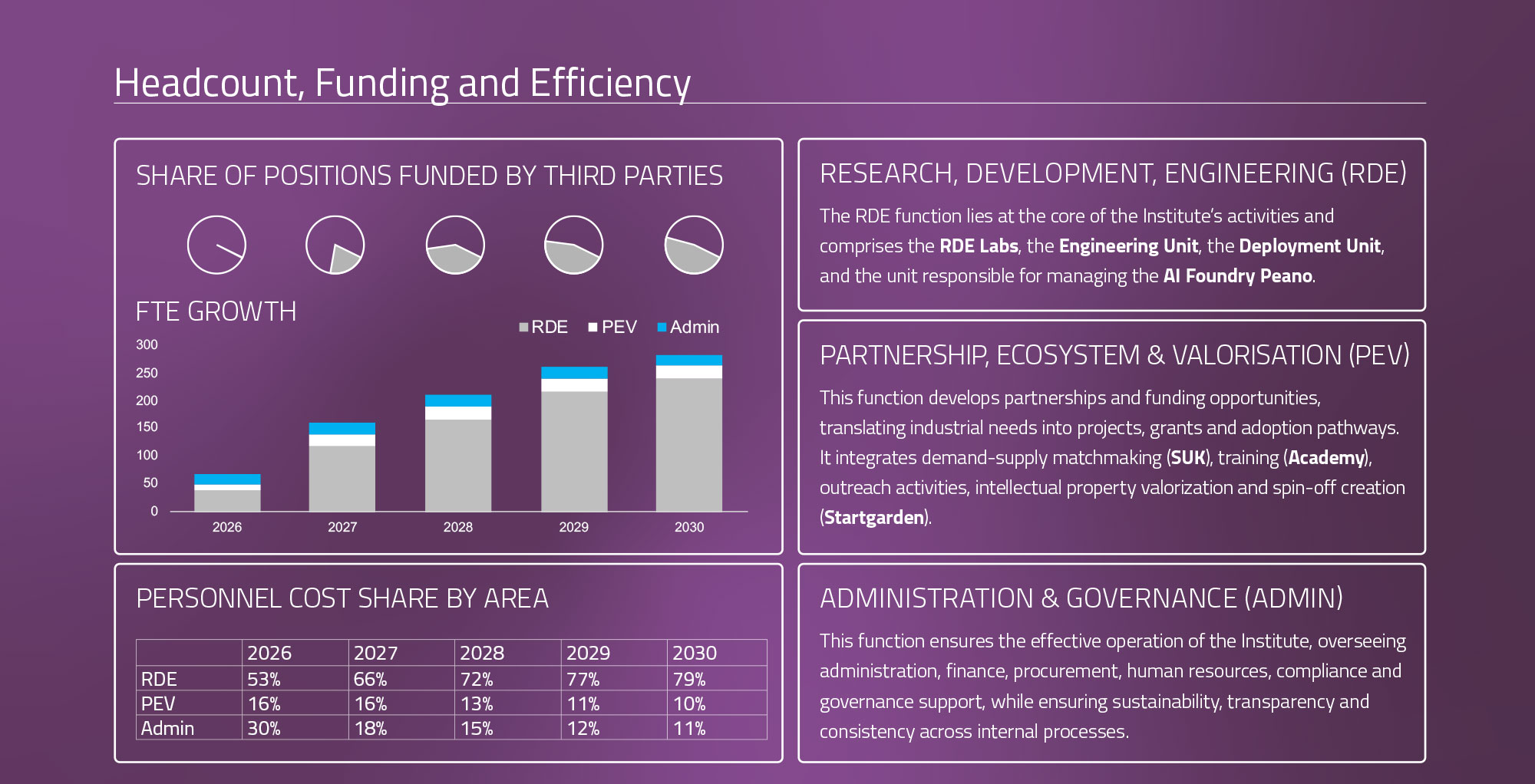
The Strategic Plan highlights how AI4I is designed to deliver its broad research, technology-transfer and ecosystem-building mission while maintaining a deliberately lean and cost-efficient organisational structure.
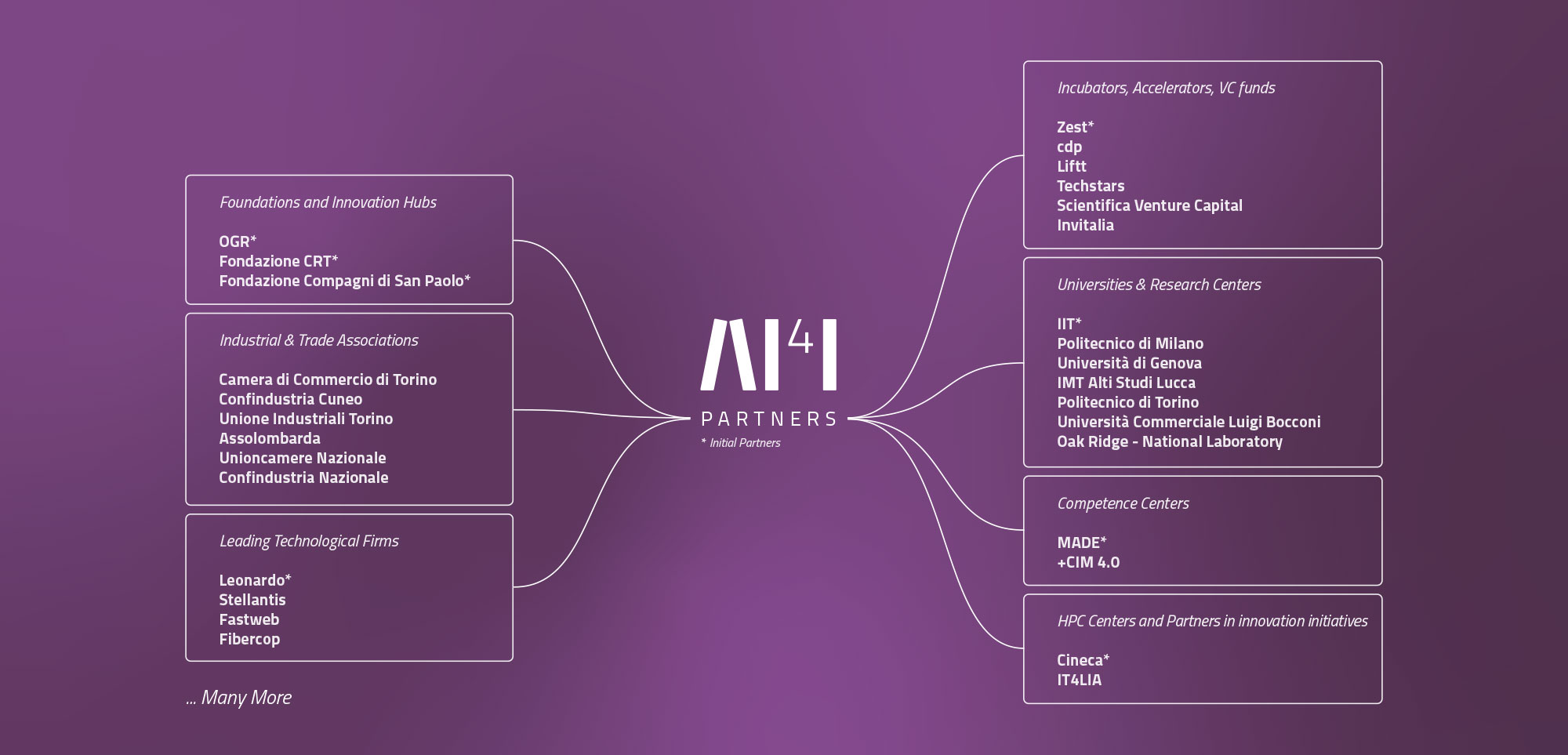
This is enabled in part by strategic partnerships, agreements and shared arrangements with key institutional partners, including the Italian Institute of Technology, Fondazione CRT-OGR, which provide access to complementary capabilities and to facilities while significantly limiting the need to replicate overhead-intensive functions and assets internally.
As a result, the Institute can concentrate a larger share of its people and financial resources on its core mission: research, technology development and engineering, together with the functions directly supporting technology adoption by Italian manufacturing SMEs and the growth of startups and innovative SMEs.
This operating model allows AI4I to combine a broad institutional mandate with a relatively light support structure, maximising the resources devoted to scientific, technological and industrial impact.