
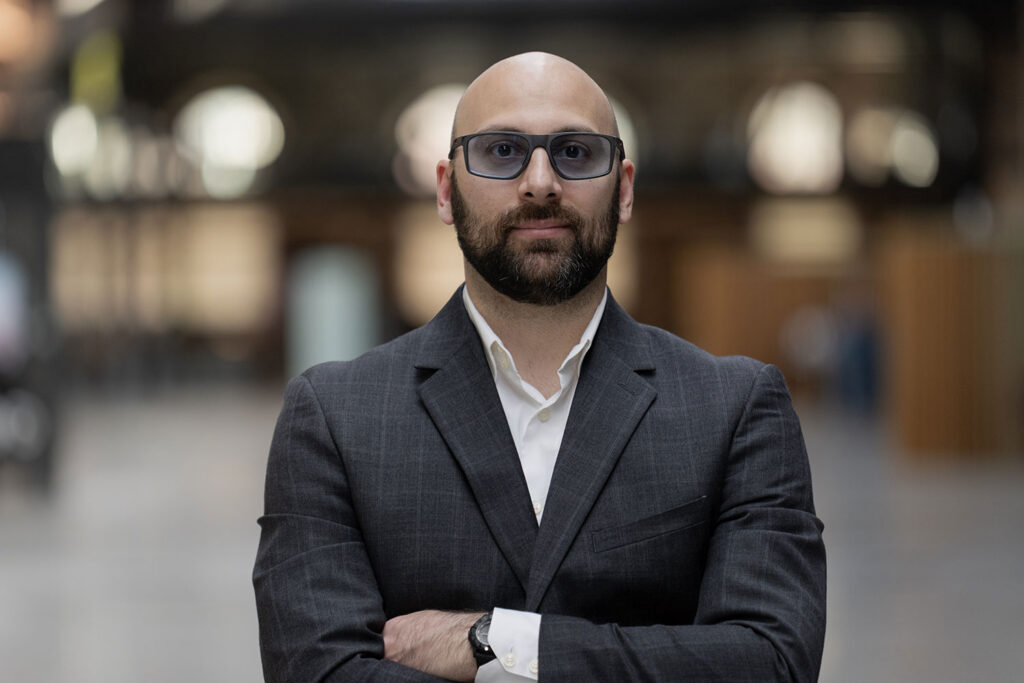
Riccardo Di Maria
The future of AI infrastructure, Europe’s technological autonomy and the growing risks of cyberattacks were at the centre of Ping Pong, the Rai Radio 1 programme hosted by Annalisa Chirico on 13 November 2026.
The discussion featured Riccardo Di Maria, Head of HPC, AI & Engineering at the Italian Institute of Artificial Intelligence (AI4I), alongside Riccardo Luna, columnist for Corriere della Sera.
Data centres: efficiency matters more than size
As Europe prepares to expand its AI computing capacity, Di Maria stressed the strategic importance of data centres for technological sovereignty, highlighting the need to design infrastructure around efficiency, resilience and evolving industrial demand.
“Data centres create value only when they are effectively used and designed to accommodate different workloads,” he explained, pointing to the rapid evolution of computing technologies and the risk of investing in infrastructure that may become obsolete within just 12–18 months.
Di Maria also advocated upgrading existing data centres to accommodate AI and high-performance computing workloads, making better use of available infrastructure, engineering expertise and energy networks.
Cybersecurity must be built into AI infrastructure
The discussion also addressed the growing threat of AI-enabled cyberattacks against critical infrastructure, including healthcare, transport and financial services.
“AI and security are now inseparable,” Di Maria observed. The same technology can strengthen defensive capabilities while making attacks faster and more sophisticated.
He emphasised that cybersecurity must be embedded in infrastructure design from the outset, combining network segmentation, access controls, continuous monitoring, skilled professionals and rapid recovery capabilities.
For AI4I, technological sovereignty ultimately means maintaining control across the entire technological stack, including computing infrastructure, AI models, applications and autonomous agents.