
What hardware will Italian artificial intelligence research rely on in five years? How can the country’s research institutions contribute to the development of technologies that address the evolving needs of its industrial and scientific communities?
What hardware will Italian artificial intelligence research rely on in five years? How can the country’s research institutions contribute to the development of technologies that address the evolving needs of its industrial and scientific communities?
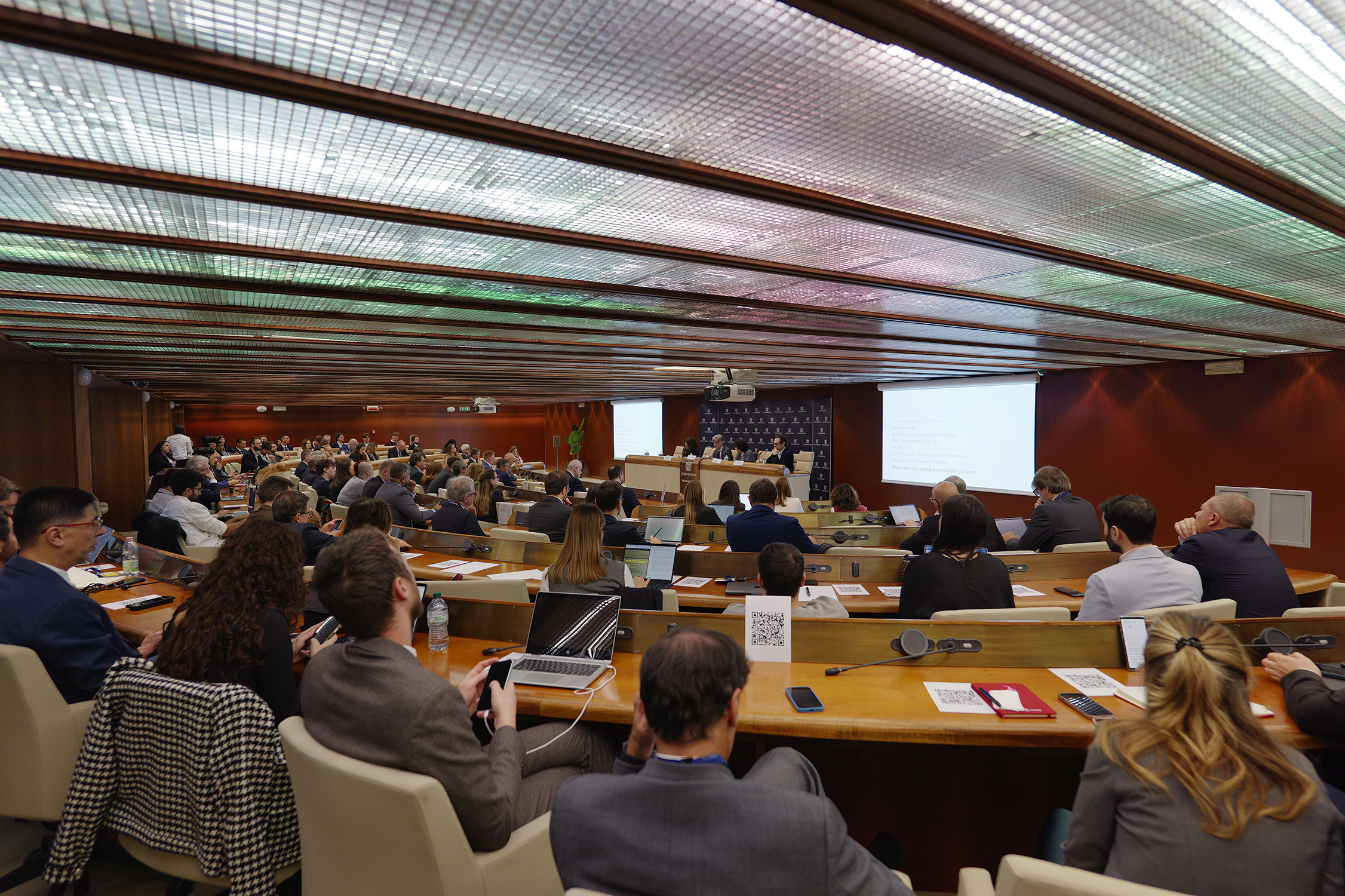
These issues were at the heart of “Silos Don’t Scale”, the panel held on 26 November 2026 as part of Italy ON CHIPS 2026, the event promoted by the Chips-IT Foundation at IBM Studios in Milan, bringing together research institutions, industry, startups, investors and institutional representatives from the semiconductor ecosystem.
Riccardo Di Maria, Director of Technology Services at the Italian Institute of Artificial Intelligence (AI4I), joined the discussion alongside Richard Hall-Wilton, Director of the Sensors & Devices Research Centre at FBK, Giorgio Metta, Scientific Director of IIT, and Carlo Reita, Director of Chips-IT. The panel was moderated by Enrico Macii, Professor at Politecnico di Torino.
Complementary expertise for technological sovereignty
The discussion focused on the complementarity of the four foundations’ missions, scientific expertise and technological infrastructures, and on the opportunities to translate these distinctive capabilities into collaborative research and development initiatives serving Italy’s scientific and industrial ecosystem.
The increasingly close relationship between artificial intelligence, advanced computing, microelectronics, robotics and sensor technologies highlights the importance of coordination between institutions operating in different but interconnected technological domains.
In this context, technological sovereignty also depends on the ability to establish a continuous dialogue between scientific research, technological development and industrial demand, identifying shared priorities and strategic application domains.
AI4I’s contribution: algorithms, computing and industrial demand
AI4I’s contribution to this collaborative framework focuses on the development of artificial intelligence algorithms, the identification of strategic application domains and the provision of feedback to guide hardware development in response to emerging industrial requirements.
An iterative dialogue between AI research, application development and semiconductor research can help identify the technological requirements associated with increasingly advanced artificial intelligence systems, taking into account the specific needs of different industrial sectors.
The AI Foundry Peano, AI4I’s advanced computing infrastructure, represents an important asset in this process, providing an environment for research, experimentation and the development and validation of AI solutions.
Physical AI: a strategic domain for collaboration
Physical AI represents a particularly significant area in which the complementary expertise of the four institutions can converge.
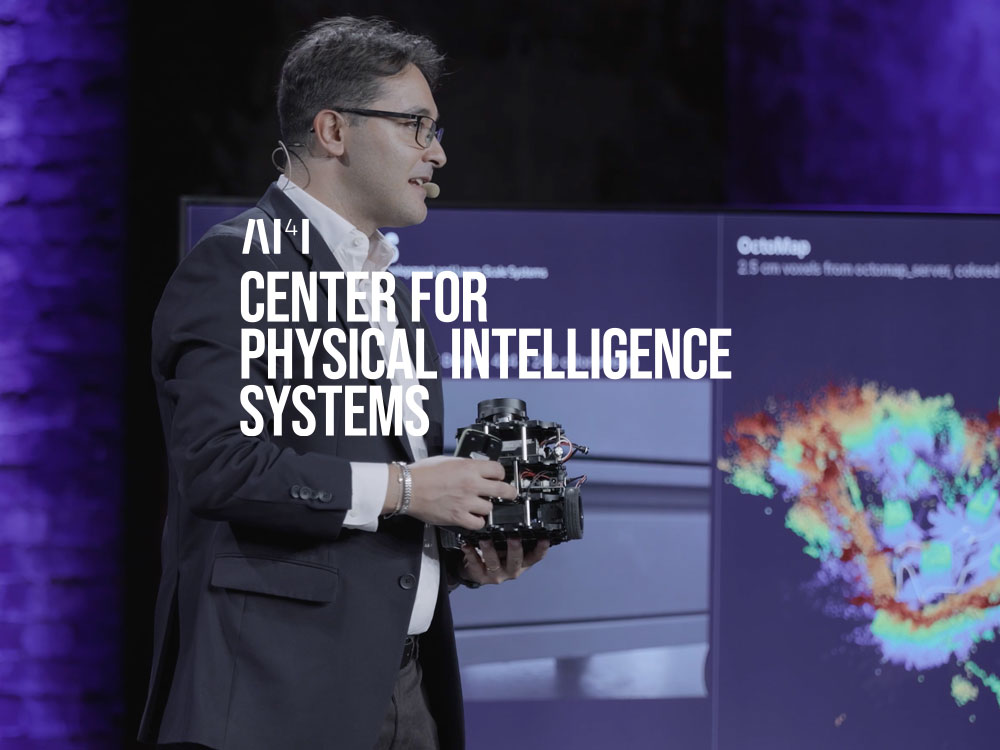
AI4I recently launched its Center for Physical Intelligence Systems, bringing together five research laboratories, a deployment unit and the AI Foundry Peano to develop robotic and autonomous systems capable of perceiving, learning, making decisions and acting in the physical world.
The development of these systems requires the integration of multiple technological capabilities: artificial intelligence algorithms, robotics, sensor technologies, microelectronics and advanced computing.
Physical AI therefore offers a concrete example of how institutions with distinct scientific missions and technological capabilities can contribute to shared research objectives, with a strong focus on industrial applications.
Strengthening Italy’s scientific and industrial ecosystem
This complementary approach can create new opportunities for research and industry, strengthen the relationship between technological development and industrial demand, and enhance Italy’s capacity to develop strategic technologies.
Building a more integrated national ecosystem, while preserving and enhancing the distinctive expertise of each institution, is a key element in strengthening the country’s technological sovereignty and industrial competitiveness.