The Chair of AI4I’s Scientific Advisory Board, a professor at Stanford University and head of autonomous vehicle and Physical AI research at NVIDIA, discusses robotics, autonomous-system safety and Europe’s industrial competitiveness.
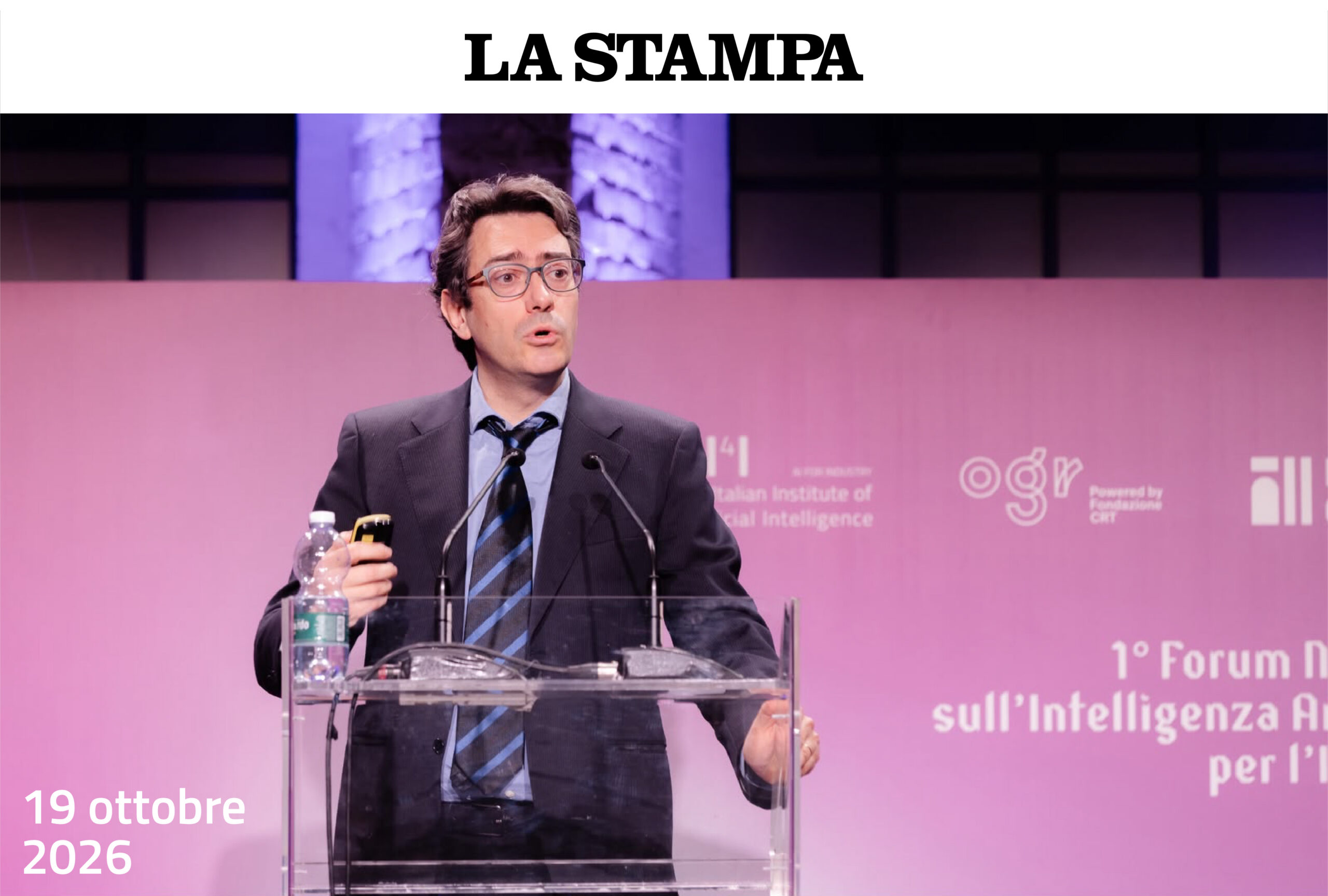
On 19 October 2026, in an extensive interview with Fabrizio Goria for La Stampa, Marco Pavone, Chair of the Scientific Advisory Board of the Italian Institute of Artificial Intelligence (AI4I), professor at Stanford University and head of autonomous vehicle and Physical AI research at NVIDIA, addressed some of the central issues shaping the evolution of artificial intelligence: its integration into physical systems, the future of robotics, application safety and Europe’s industrial position relative to the United States and China.
The interview examines ongoing technological change and its economic and industrial implications, touching on issues central to AI4I’s mission: advancing research, translating innovation into industrial applications and strengthening technological capabilities.
Physical AI: artificial intelligence enters the physical world
At the heart of Pavone’s analysis is Physical AI: artificial intelligence embedded in systems capable of interacting with the physical environment, such as autonomous vehicles and humanoid robots.
This transformation is the result of more than fifteen years of investment in research and technological development and is now finding increasingly concrete applications in mobility, robotics and autonomous systems.
Advances in AI models are enabling systems to handle complex situations, interpret different contexts and adapt their behaviour to conditions not fully anticipated during training. The development of advanced driver-assistance systems and the spread of autonomous mobility services are among the clearest examples of this transformation.
Safety and reliability: three requirements for autonomous systems
A central part of the interview concerns the safety of AI systems operating in the physical world, where algorithmic decisions can have tangible consequences.
Pavone explains that the reliability of autonomous systems must rest on three complementary engineering principles.
The first is algorithmic redundancy, allowing another system to take over rapidly if one component fails. The second is continuous, real-time monitoring of decisions made by autonomous systems. The third is rigorous validation through simulation, essential for testing model behaviour before deployment in real-world environments.
Together, these methods make it possible to achieve high levels of reliability and are essential for deploying AI in complex industrial and operational settings.
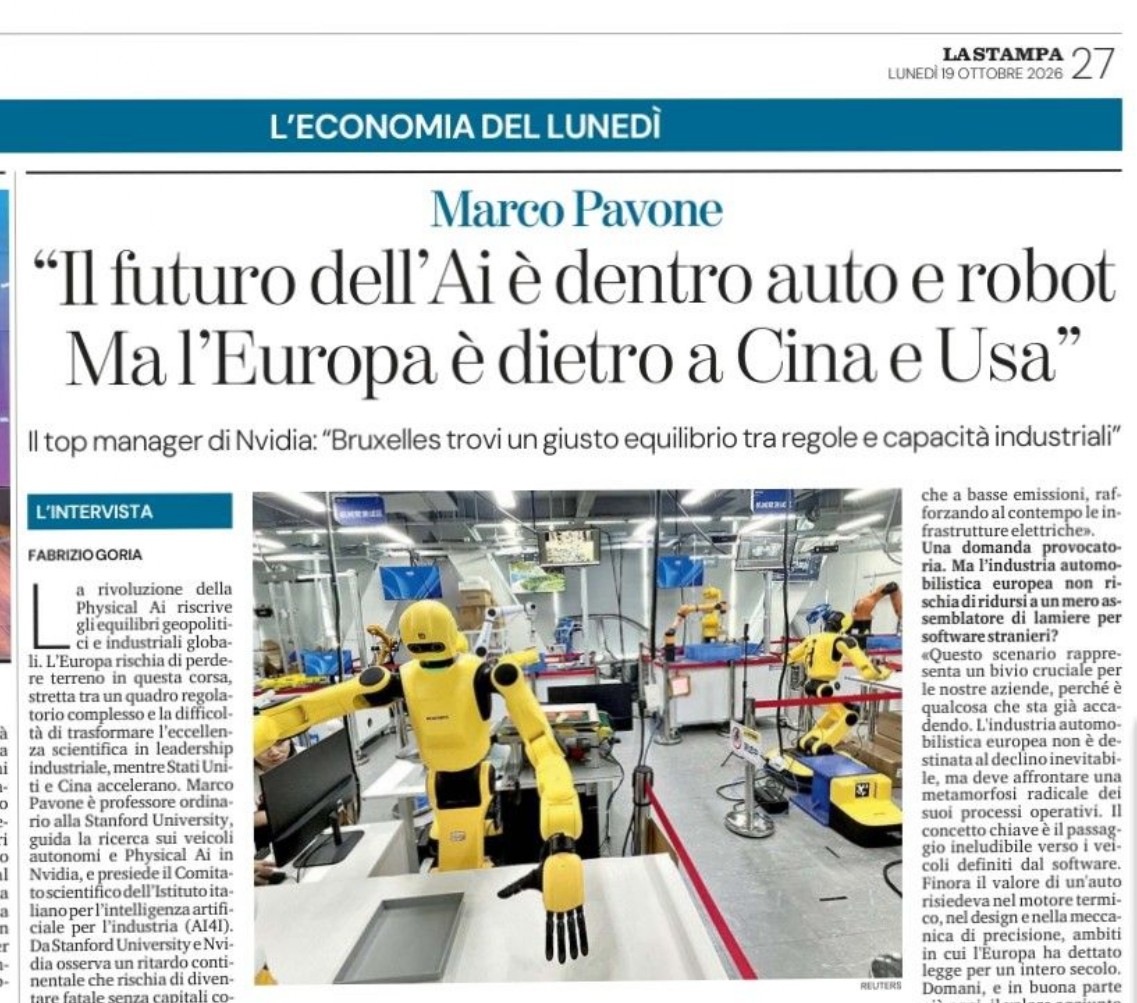
Marco Pavone, La Stampa